


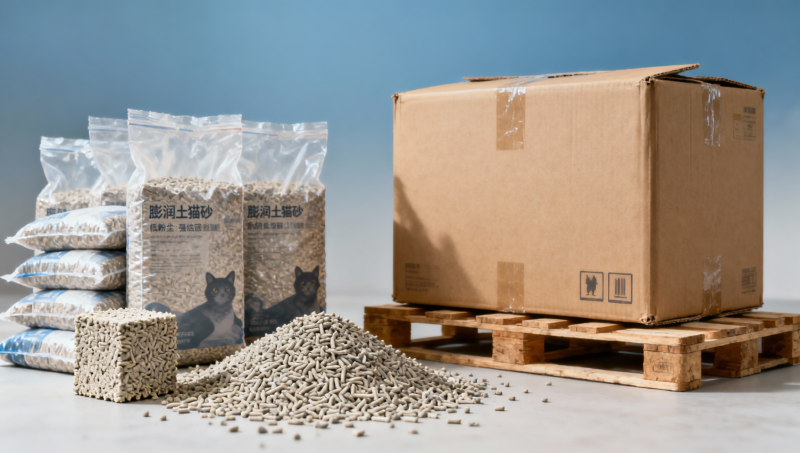
When evaluating bentonite cat litter wholesale, the quoted unit price rarely reflects the full landed and operating cost. In practice, hidden expenses usually come from moisture instability, dust control, clumping performance, packaging strength, shipping efficiency, quality consistency, claims handling, and supplier coordination. For importers, distributors, private-label buyers, and procurement teams, the smartest approach is not to ask only “What is the cheapest price per ton?” but “What is the real cost per saleable, complaint-free bag delivered to the end customer?”
That is the key search intent behind this topic: buyers want to identify the non-obvious costs that can reduce margin after purchase. They also want practical ways to compare suppliers, avoid quality surprises, and make better OEM or ODM sourcing decisions. For most readers in purchasing, finance, technical review, quality control, and management, the real concern is simple: how do you prevent a low quoted price from turning into a high total cost?
Why the wholesale price alone can be misleading
In bentonite cat litter wholesale, the invoice price is only one part of total procurement cost. A supplier may offer an attractive rate, but if the product creates excess dust, weak clumping, damaged bags, unstable moisture, or inconsistent granule size, the downstream cost rises quickly. Those losses may appear in customer complaints, reduced repurchase rates, warehouse waste, higher transport cost per effective unit sold, and extra labor for sorting or claim management.
For business buyers, the more useful metric is total cost of ownership. That includes:
- Product cost
- Ocean or inland freight
- Packaging cost
- Loading efficiency
- Breakage and leakage loss
- Moisture-related weight variation
- Dust complaints and returns
- Quality inspection and rework time
- Private label or OEM coordination cost
- After-sales risk and compensation
If a lower-priced litter performs poorly in even two or three of these areas, the initial savings can disappear.
Moisture content can quietly change both cost and performance
One of the most overlooked hidden costs in bentonite clay cat litter wholesale is moisture. Bentonite is a natural mineral product, and moisture control affects weight, storage behavior, clumping speed, odor absorption, and bag condition.
If moisture is too high, buyers may face several problems:
- The product feels heavier at shipment but performs worse in use
- Clumping may become slower or less solid
- Bags may soften or deform during storage and transport
- Long transit times can create caking or lumping inside unopened bags
If moisture is too low, the product may generate more dust or become less stable during filling and handling. For wholesale buyers, this means moisture must be treated as a commercial control point, not just a technical number on a specification sheet.
A practical purchasing question to ask is: what is the shipment moisture range, and how consistent is it across batches? A stable range helps reduce unexpected performance deviation and claim risk.
Dust level affects more than user experience
Dust is not only a consumer satisfaction issue. It can become a direct financial cost for distributors, retailers, and brand owners. Excess dust often leads to negative reviews, product returns, cleaner shelf appearance issues, and more complaints from households sensitive to fine particles.
Hidden dust-related costs include:
- Higher complaint rates in e-commerce channels
- Reduced brand trust for private-label programs
- More warehouse cleanup and handling loss
- Potential rejection by quality-conscious distributors
Many buyers focus on “low dust” claims without asking how the test is defined. A better method is to request sample evaluation under actual filling, transport, and end-use conditions. For OEM or ODM projects, dust performance should be part of the approval standard before contract confirmation.
Weak clumping creates hidden losses at the consumer and brand level
Strong clumping is one of the main reasons buyers choose bentonite litter, but not all bentonite performs equally. If clumps break during scooping, consumers use more litter, trays become dirtier faster, and odor control seems weaker even if the raw material itself is acceptable.
This creates hidden costs in several ways:
- Faster product consumption, reducing perceived value
- Lower repurchase rates
- Higher risk of negative marketplace reviews
- More pressure on customer service teams
For wholesalers and importers, clumping strength is not just a product feature. It directly affects the saleability and reputation of the SKU. That is why technical evaluation should include clump formation speed, hardness, and breakage resistance after standing for a defined period.
Packaging quality can increase freight loss and customer claims
Packaging is another area where hidden costs often appear after the order is shipped. A bag may look acceptable in a sample room but fail under pallet pressure, container humidity, rough handling, or long-distance transport.
Poor packaging can lead to:
- Bag leakage during loading and unloading
- Torn corners and sealing failure
- Damaged outer appearance for retail channels
- Extra shrink wrapping or repacking cost
- Inventory loss from unsellable units
For procurement and quality teams, it is important to evaluate not only bag design but also film thickness, seal strength, print durability, pallet configuration, and container loading method. In many cases, slightly better packaging reduces total cost more effectively than negotiating a lower product price.
Logistics and loading efficiency can change the true landed cost
Even when product quality is acceptable, logistics can create hidden wholesale costs. Bentonite cat litter is heavy, so container utilization, port access, transit time, and loading density have a major effect on landed cost per bag.
Buyers should review:
- How many bags or tons fit per container
- Whether packaging dimensions reduce loading efficiency
- How close the factory is to export ports
- Whether port congestion or inland trucking adds delay risk
- If mixed SKU loading is possible for distributors
For example, a supplier with convenient access to major ports may help reduce inland transport complexity and timing uncertainty. This matters especially for businesses managing seasonal demand, promotional launch dates, or distributor commitments.
Quality inconsistency is often the most expensive hidden cost
A low first-order price means little if later shipments are inconsistent. Batch variation in color, granule size, absorbency, odor control, clumping, or dust level can force buyers into repeated inspections, sales delays, discounting, and claim negotiations.
The hidden costs of inconsistency include:
- Additional incoming inspection time
- Production or packing schedule disruption
- Retailer rejection or relabeling cost
- Difficulty building a stable private-label brand
- Loss of trust between supplier and buyer teams
This is especially important in Natural mineral cat litter ODM and Bentonite clay cat litter OEM service projects, where buyers often need stable sensory performance and packaging execution over time. A capable manufacturer should have clear raw material control, production standards, traceability, and lot-based quality records.
OEM and ODM projects may carry hidden coordination costs
Private-label sourcing brings opportunities, but it also introduces extra layers of cost that do not appear in a basic ex-works quotation. These may include artwork revisions, packaging development, sample rounds, compliance checks, barcode management, translation review, and production confirmation delays.
Common hidden OEM/ODM costs include:
- Multiple packaging proof revisions
- Longer lead times for customized bags
- Minimum order pressure for special designs
- Approval delays between purchasing, marketing, and quality teams
- Extra communication cost if specifications are unclear
To control these costs, buyers should lock down specifications early: granule size, dust requirement, moisture range, fragrance or unscented option, bag material, bag size, pallet rules, and inspection standard. Clear documentation saves both money and time.
After-sales risk is a real financial factor, not a side issue
Many buyers underestimate the cost of handling problems after delivery. If the product receives complaints for dust, odor, weak clumping, or broken bags, the financial impact can extend beyond direct refunds.
After-sales hidden costs may include:
- Customer service labor
- Replacement shipments
- Retail penalties or chargebacks
- Discount campaigns to clear affected stock
- Brand damage in online reviews
That is why supplier selection should include responsiveness, claims handling process, and willingness to support corrective action. A supplier that reacts quickly to issues may protect margin better than one with a slightly lower quote but poor after-sales cooperation.
How buyers can evaluate the real cost before placing an order
To avoid hidden costs in bentonite cat litter wholesale, buyers should compare suppliers using a structured checklist instead of price alone. A practical review process includes the following:
- Check technical specifications
Review moisture, dust, granule distribution, absorbency, and clumping performance. - Test real samples
Use side-by-side trials under realistic scooping and storage conditions. - Evaluate packaging durability
Look at seal quality, compression resistance, and leak risk. - Calculate landed cost
Include freight, loading efficiency, customs-related factors, and warehouse loss. - Review consistency controls
Ask about mine source, raw material management, and batch traceability. - Confirm OEM/ODM workflow
Clarify approvals, lead times, artwork process, and quality responsibility. - Assess supplier support
Check communication speed, issue resolution, and export experience.
This type of evaluation is especially useful for procurement teams, finance approvers, and business decision-makers who need a defensible purchasing decision based on long-term value rather than headline pricing.
What a better wholesale decision looks like
A good bentonite cat litter wholesale decision balances cost, consistency, logistics, and market fit. The right supplier is not simply the one offering the lowest quote, but the one able to deliver stable product performance, reliable packaging, efficient export support, and manageable after-sales risk.
For buyers comparing manufacturers, a supplier with mineral resource access, production experience, and OEM/ODM capability may be better positioned to control both quality and commercial risk over the long term. This is particularly relevant when building private-label lines, supplying distributors, or serving demanding retail and e-commerce channels.
In summary, the hidden costs in bentonite cat litter wholesale usually come from the gap between quoted price and usable value. Moisture, dust, clumping, packaging, logistics, consistency, and service all affect the final margin. Buyers who evaluate these factors early are far more likely to avoid surprises, reduce claims, and choose a product that performs well in the market.
For businesses looking at dependable mineral cat litter sourcing and customized supply options, it is worth reviewing products such as Strong clumping cat litter as part of a broader supplier and performance comparison.
Leave A Message
CONTACT US