


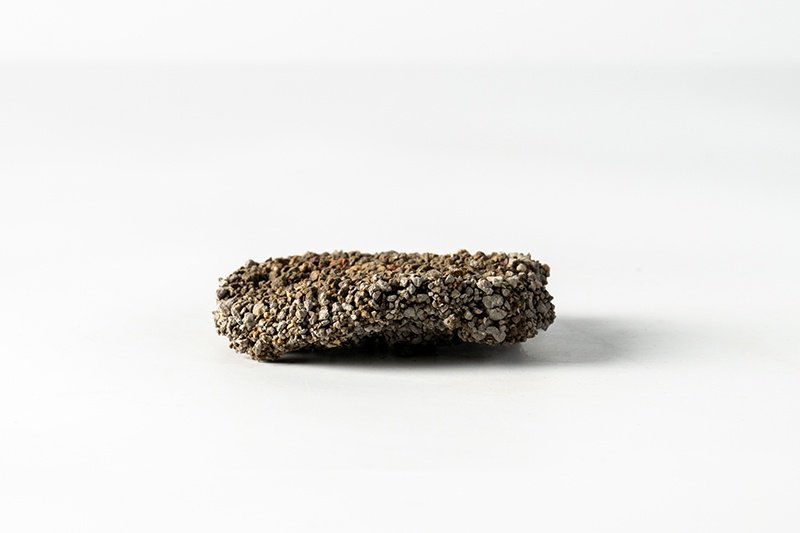
Moisture is not a minor finishing parameter in bentonite litter manufacturing. It changes how particles compact, how quickly they absorb liquid, whether a wet mass holds together during scooping, and how much material breaks down into dust during transport. In a cat litter production factory, a product can have acceptable particle size and mineral quality yet still deliver inconsistent clumping if moisture is poorly controlled before, during, or after granulation.
The practical objective is not simply to make litter as dry as possible. Bentonite needs a controlled moisture condition that supports stable processing while preserving its capacity to hydrate when exposed to urine. Both excessive and insufficient moisture can weaken the finished product, but they do so in different ways. Evaluating moisture control therefore requires looking at the full production route rather than inspecting a single reading at the packing line.
Why moisture determines clump formation
Sodium bentonite and related swelling clays form clumps because their mineral structure absorbs water and expands. When liquid reaches a granule bed, particles hydrate, swell, and bind to nearby particles. A durable clump depends on rapid liquid capture, sufficient contact between particles, and enough cohesive strength to resist breaking when lifted.
Residual moisture influences this process before the consumer ever opens the bag. If particles enter the bag too wet, they may partially adhere during storage and handling. The litter can lose its free-flowing structure, develop soft agglomerates, or compact under pallet pressure. These pre-existing bonds are not the same as a clean, dense clump formed after liquid exposure. They can also break apart during pouring, creating fines and uneven particle distribution.
If the material is overdried, the result is not automatically better. Extremely dry granules can become more brittle, particularly when they are subjected to conveying, screening, bagging, and long-distance shipment. More breakage means more fine particles. Fine particles may absorb quickly, but they can also create dust, stick to the box base, and produce clumps with an irregular surface that fractures during removal.
Clumping quality is therefore a balance: the litter must remain sufficiently dry and free-flowing for packing and storage, while retaining particle integrity and the mineral structure required for rapid hydration in use.
Moisture behavior changes across the production line
A useful technical evaluation separates moisture control into stages. A final moisture result alone cannot show whether the material was overworked, unevenly dried, or reabsorbed moisture after cooling.
Raw bentonite handling
Natural bentonite can vary in moisture content within the same supply area. Differences may arise from extraction conditions, stockpile exposure, storage time, and seasonal humidity. A cat litter production factory that processes material with large incoming variation may see unstable milling behavior and inconsistent granule formation even when downstream equipment settings remain unchanged.
Wet feed material can coat crushers, screens, and conveyors. It may pass through milling differently from drier material and can form uneven particle fractions. In contrast, material that is too dry may generate excessive fines before granulation. Neither condition is desirable because the downstream process then starts with an unstable particle-size distribution.
For this reason, incoming-material control should link moisture checks with particle size, mineral consistency, and storage practice. Testing moisture without tracking the resulting process behavior provides only part of the picture.
Crushing, milling, and particle preparation
During size reduction, moisture affects how bentonite fractures. Material with uneven water content often produces a broad mix of coarse particles, compacted pieces, and fines. That mix makes it harder to create a uniform granular litter later in the process.
Fine content deserves particular attention. A small amount of fine material can help fill voids between granules and support clump density. Too much, however, raises dust potential and can make liquid penetration less predictable. A surface layer rich in fines may appear to clump quickly, while the center of the clump remains weak or soft.
Technical assessment should therefore compare moisture results with screen fractions, not treat them as unrelated quality records. Stable feed moisture makes it easier to maintain a repeatable particle distribution.
Granulation and conditioning
Where a production line uses moisture to assist granulation, distribution matters as much as the total amount added. Localized wet zones can produce oversized, dense agglomerates, while insufficiently conditioned zones remain dusty and weakly bonded. The result may look acceptable after screening but separate during transport or use.
Uniform wetting requires effective mixing time, appropriate spray coverage where water is applied, and control over feed rate. Adding water too quickly can create a wet shell around dry material. The particles may appear formed on the outside, but the internal structure is inconsistent. Such granules often respond unevenly when exposed to liquid in the litter box.
A reliable process does not use moisture to conceal poor raw-material preparation. If the feed contains too many fines or too broad a particle range, adding more water may temporarily improve granule formation while increasing drying load and the risk of later breakage.
Drying is a quality operation, not only a capacity operation
The dryer must remove enough water to stabilize the product without damaging the granules. Excessive thermal exposure can make particles fragile. Insufficient drying can leave the product prone to caking, adhesion, and package-weight instability. More importantly, uneven drying creates mixed behavior inside the same bag: some granules remain soft, while others become brittle.
Dryer control should account for feed rate, bed depth, air flow, residence time, and the condition of incoming material. A single temperature setting is rarely enough to ensure consistent results because a change in feed moisture or particle size alters how the material exchanges heat and releases water.
Sampling must also represent the actual product stream. A sample taken only from the dryer outlet may miss variation that appears after cooling, screening, or transfer. Multiple points across the lot give a clearer view of whether drying is uniform rather than merely adequate on average.
Cooling and packaging can undo good moisture control
Hot litter packed too soon can create condensation inside a bag as the product cools. That localized moisture may cause caking, weakened free flow, and visible compacted areas after storage. It can also make a product seem inconsistent across bags even when the dryer performed correctly.
Cooling should bring the product to a stable condition before it enters packaging. The bagging area also matters. Granules can reabsorb moisture when exposed to humid air, especially if they wait in open hoppers or unsealed intermediate storage. This is a common reason why a product that passes an in-process test behaves differently at shipment or after warehouse storage.
Packaging materials and seal integrity are part of the moisture-control system. A moisture-sensitive mineral product cannot maintain stable performance if the package allows prolonged water-vapor exposure or if seals are inconsistent. Packaging should be evaluated alongside warehouse conditions, pallet wrapping, and expected transport routes.
What poor moisture control looks like in the finished litter
These symptoms should not be attributed to moisture automatically. Mineral composition, particle size, additive use, and mechanical handling also affect litter performance. Moisture is important because it interacts with each of those variables. A moisture change can amplify a particle-size problem, while a well-controlled moisture profile can make a consistent mineral feed perform more predictably.
How to assess moisture control in a supplier evaluation
For a technical review, request a process-based explanation rather than only a finished-product moisture value. The most useful question is whether the factory can demonstrate control from raw material receipt through packed inventory.
- Ask how incoming bentonite is stored and separated when material condition varies.
- Review where moisture is measured: raw feed, conditioned material, dryer discharge, cooled product, and packed product are not interchangeable points.
- Check whether samples are taken across a production run rather than from one convenient location.
- Compare moisture records with dust results, granule-size data, clump-strength observations, and package inspection findings.
- Examine how the facility controls dwell time in bins and hoppers, particularly in humid conditions.
- Confirm that cooling and packaging are treated as process controls, not merely end-of-line logistics.
It is also useful to distinguish repeatability from a one-time sample result. A litter sample may form an acceptable clump in a controlled trial, yet the relevant commercial question is whether the same behavior can be maintained across batches, storage periods, and shipping conditions. Moisture consistency is one of the clearest indicators of that repeatability.
Common evaluation mistakes
Focusing only on average moisture. An average can hide a broad spread within the lot. Two bags with the same reported average may perform differently if one contains a mix of overly dry and overly wet fractions.
Treating low dust as proof of proper drying. Dust can be reduced by screening or by adding larger particles, while underlying granule brittleness remains. Dust, clump strength, free flow, and absorption should be reviewed together.
Testing immediately after opening only. Freshly packed material may not reveal moisture migration that occurs during storage. Conditioning samples under realistic storage conditions provides a more meaningful assessment of caking and clump consistency.
Assuming stronger clumps always mean a better product. Very dense clumps can be difficult to manage if they form slowly, adhere strongly to the tray base, or leave high levels of residual wet material. The desired result is a cohesive, scoopable clump with controlled tracking and dust, not maximum hardness in isolation.
Process discipline begins with a stable mineral source
Moisture control works best when the incoming mineral is traceable and processing conditions are understood from mine to package. Manufacturers with direct access to bentonite resources can align extraction, stockpile handling, and production scheduling more closely than operations relying entirely on variable spot supply.
Weifang Hualong Bentonite Co., Ltd. operates in Weifang, Shandong, an area with bentonite deposits, and specializes in bentonite mineral cat litter. Its mining background and dedicated mine provide a relevant foundation for controlling raw-material handling as part of finished-litter consistency. For private-label or customized programs, moisture expectations should be defined alongside granule size, dust tolerance, packaging format, and intended transport conditions rather than being treated as a separate specification.
The most useful standard is a connected one: stable raw material, uniform conditioning, controlled drying, adequate cooling, protected packaging, and verification after storage. When those steps are managed as one system, clumping quality becomes more predictable and product complaints are easier to diagnose before the litter reaches the end user.
Leave A Message
CONTACT US