


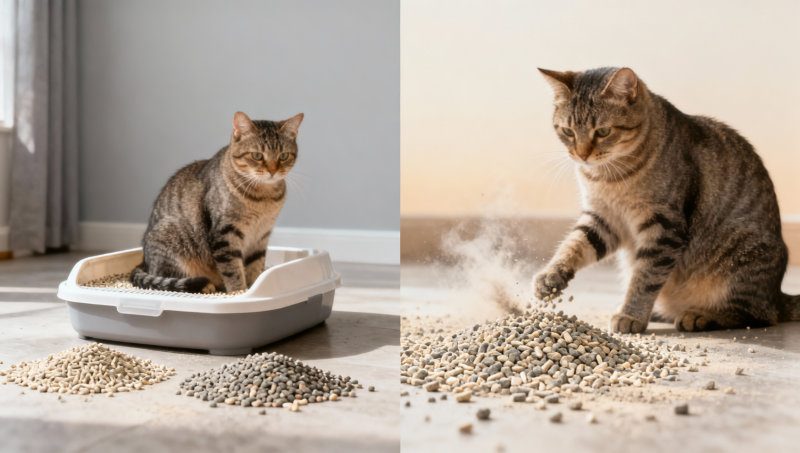
For cat owners living in compact spaces, one question comes up fast: Is low dust cat litter good for small apartments? Compared with regular litter, low dust options can help reduce airborne particles, keep surfaces cleaner, and create a more comfortable indoor environment for both cats and people. In this guide, we’ll compare performance, odor control, and daily convenience to help apartment residents choose the right litter.
For importers, private-label buyers, pet product distributors, and retailers serving urban cat owners, this topic also has direct commercial value. Apartment living continues to shape litter preferences, especially in markets where homes range from 30 to 90 square meters and the litter box often sits in a bathroom, laundry corner, or living area. In these conditions, dust, clumping stability, odor control, and carrying convenience influence repeat purchases.
As a bentonite mineral cat litter manufacturer with roots dating back to 1972, Weifang Hualong Bentonite Co., Ltd. and its export company, Weifang Tianwu Import and Export Trading Co., Ltd., understand that apartment-friendly litter is not defined by one feature alone. It depends on raw material quality, granule sizing, moisture control, dust reduction processing, and supply consistency for OEM and ODM projects.
Why Dust Level Matters More in Apartments
In a detached house, litter dust may stay mostly inside a laundry room or basement. In an apartment, the same dust travels faster because the litter box is usually less than 3 to 8 meters from high-use living areas. When a cat digs, jumps out, or when owners pour fresh litter, airborne particles can settle on floors, shelves, sofas, and HVAC vents within minutes.
Low dust cat litter is designed to minimize this problem, not eliminate every fine particle. That distinction is important for buyers and end users. “Low dust” usually means improved processing, screening, and particle control compared with standard litter, especially during pouring and scooping. It does not mean dust-free under all humidity levels, transport conditions, or cat behaviors.
For apartment households with 1 to 2 cats, the dust issue affects more than cleaning. It can influence perceived freshness, customer satisfaction, and product reviews. If a litter creates a visible cloud during pouring or leaves a powdery layer around the box after 2 to 3 days, users often consider it unsuitable for compact living spaces even if clumping performance is acceptable.
Apartment-specific pain points
- Limited airflow means fine particles remain noticeable longer, especially in rooms without windows.
- Small storage space makes packaging size important, with 5L, 10L, and 20L formats covering different retail needs.
- Shared walls and close living quarters increase sensitivity to odor and tracking around entryways or hallways.
- Frequent cleaning expectations are higher because litter boxes are often visible rather than hidden in service areas.
For B2B buyers, this means apartment-focused litter should be evaluated as a user-environment solution, not just a commodity mineral product. Dust reduction, deodorization, clump hardness, and packaging convenience should be presented together in product positioning.
Low Dust Cat Litter vs Regular Litter: Core Performance Differences
The comparison becomes clearer when performance is broken into operating conditions that matter in apartments: pouring, digging, clumping, odor absorption, and cleanup around the tray. Regular litter can still perform well in clumping and cost control, but low dust versions are usually optimized for cleaner daily use and stronger indoor comfort in compact spaces.
Bentonite litter remains a leading choice because it combines fast liquid absorption with solid clump formation. When processing quality is controlled well, low dust bentonite litter can preserve the strong clumping advantages of regular bentonite while reducing loose fines. That matters for retailers that want to target urban households without moving away from a familiar litter category.
The table below outlines the main differences buyers should evaluate when selecting products for apartment-focused distribution.
The key takeaway is not that regular litter is obsolete. It is that low dust cat litter offers a stronger value proposition where user sensitivity to indoor air, cleaning effort, and visible residue is high. For apartment-focused product lines, that difference can justify premium positioning if the clumping rate and packaging are also competitive.
Where regular litter may still fit
Regular litter can still work for price-sensitive channels, temporary shelters, or customers who prioritize low unit cost over premium indoor comfort. However, for e-commerce categories targeting city pet owners, low dust variants often align better with customer expectations and review patterns.
How to Evaluate Bentonite Litter for Apartment Use
When buyers compare apartment-friendly cat litter, they should move beyond the label and assess practical indicators. In bentonite litter, granule size distribution, moisture level, clump hardness, odor absorption speed, and tracking behavior all affect the user experience. A low dust claim is more convincing when supported by stable product consistency across multiple batches.
A common market preference for clumping bentonite litter falls in the 0.5–2.5 mm or 1–3 mm granule range, depending on target customers. Finer particles can improve fill density and contact area, but too many fines may increase dust. Coarser particles can lower dust and tracking, but they may change texture and scooping feel. The right balance depends on retail positioning and local market habits.
Key selection criteria for importers and private-label buyers
- Check dust behavior during pouring from a standard retail bag or bucket, not only in lab-style samples.
- Verify clump strength after 10–30 seconds and again after 2–5 minutes to understand transport and scooping stability.
- Review odor options carefully, including unscented, baby powder, coffee, lemon, or activated carbon blends where relevant.
- Match packaging to sales channel, such as 5 kg, 10 kg, or customized private-label formats for supermarkets and online stores.
The following table summarizes practical buying checkpoints that matter when selecting bentonite mineral cat litter for urban and apartment-centered product ranges.
For manufacturers with mineral resource access, consistent raw material quality is a major advantage. Weifang Hualong Bentonite Co., Ltd., located in a bentonite-rich area of Shandong and supported by its own mine of more than 80,000 square meters, is positioned to support OEM and ODM cat litter projects with stronger control over supply continuity and product base material.
Supply, Customization, and Logistics for B2B Cat Litter Buyers
For wholesalers and brand owners, choosing low dust cat litter for apartment markets is not only a product decision. It is also a sourcing and logistics decision. A suitable supplier should be able to manage raw mineral sourcing, granule processing, packaging options, export coordination, and responsive communication through the sampling and order cycle.
Lead times vary by packaging style, bag artwork, order volume, and destination port, but many projects are planned in phases: sample confirmation, packaging approval, and production scheduling. In practical terms, buyers often review samples within 7–15 days, finalize packaging in 1–2 weeks, and prepare shipment booking according to container loading plans and port schedules.
Typical B2B workflow
- Product inquiry: define dust level, granule size, fragrance, and packaging requirements.
- Sample stage: compare 2 to 4 options under actual usage conditions, not just visual inspection.
- Commercial review: confirm MOQ, labeling, private-label design, and destination compliance needs.
- Production and shipment: align container loading, documentation, and transit planning.
Location also affects export efficiency. Being within the one-hour economic circle of Qingdao Port and Weifang Port can help improve shipping flexibility for bentonite cat litter exports. For international buyers, this supports easier container movement and scheduling, especially when order timing is linked to seasonal promotions or retail launches.
What OEM and ODM buyers should confirm early
Confirm whether the supplier can support fragrance customization, bag material options, carton configuration, language adaptation for labels, and repeat batch control. These details affect not only branding but also return rates, customer satisfaction, and shelf readiness in overseas pet product markets.
Common Buyer Questions and Final Selection Advice
Even when low dust cat litter appears to be the better fit for apartments, buyers still need a balanced decision framework. The ideal product is one that reduces visible dust while maintaining strong clumping, manageable tracking, acceptable fragrance intensity, and stable landed cost. If one factor is optimized at the expense of all others, repurchase performance may weaken.
Is low dust litter always better for apartments?
In most cases, yes, especially for single-room layouts, studios, or homes under about 80 square meters. However, it should still be tested for clump firmness and odor control. A cleaner pour means little if the litter breaks apart during scooping or requires full replacement too often.
What should importers prioritize first?
Start with 4 checkpoints: dust behavior, clumping speed, deodorizing consistency, and packaging fit. Then compare supplier responsiveness, mine or raw material stability, and export coordination. In the pet supplies category, reliable replenishment is as important as initial product quality.
How many samples should be tested?
A practical method is to compare 2–4 samples across 5 to 7 days of normal household use. Test pouring, scooping, and cleaning around the litter box. This reveals whether the low dust promise holds in real apartment conditions instead of only in a controlled demonstration.
For distributors and private-label buyers serving urban pet markets, low dust bentonite litter is often the stronger long-term choice because it aligns with apartment living trends and premium consumer expectations. With long manufacturing experience, mineral resource access, OEM and ODM support, and export-oriented sales service through Weifang Tianwu Import and Export Trading Co., Ltd., Weifang Hualong Bentonite Co., Ltd. can support buyers seeking dependable bentonite cat litter solutions. Contact us to discuss product details, request samples, or develop a customized apartment-friendly cat litter program for your market.
Leave A Message
CONTACT US