


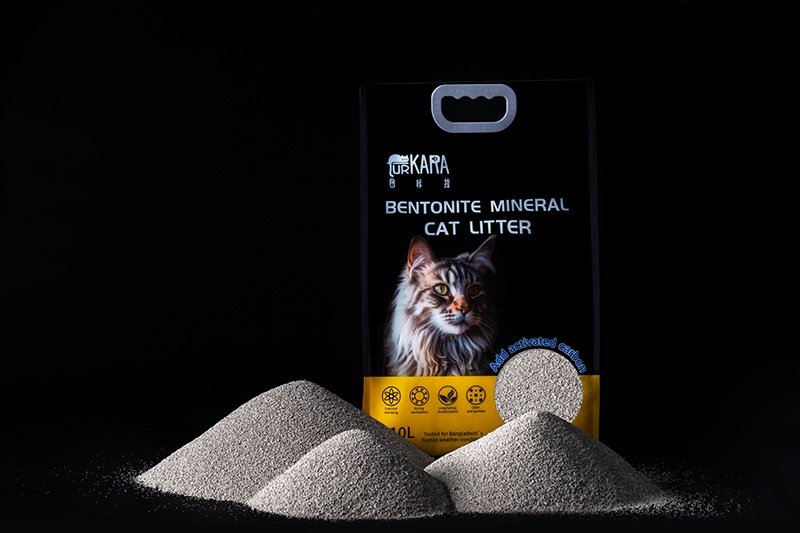
How Can Brands Plan Around Custom Cat Litter Lead Times?
A custom cat litter project rarely runs on the timetable implied by a sales forecast. A brand may know exactly when it wants to launch, but the product still has to move through formulation confirmation, raw-material scheduling, packaging approval, production, quality checks, container loading, and ocean or inland transport. One missed decision early in the process can easily affect the shipment date later.
This is especially true for private-label bentonite litter. Buyers sourcing fast clumping cat litter odor control products often focus first on clump strength, dust, fragrance, or packaging appearance. Those are important commercial decisions, but each one can also alter the lead time. A custom formula is not simply a standard litter in a different bag. It may require changes to granule selection, additive handling, mixing, printing, packing configuration, or quality expectations.
The practical question is not “How fast can a factory ship?” It is “Which parts of this project are already fixed, and which parts are still open?” Brands that make that distinction early are much less likely to face stockouts, rushed artwork approvals, or expensive airfreight decisions that make little sense for a heavy mineral product.
Lead Time Starts Before Production
For custom cat litter, the visible production period is only one part of the calendar. Before a factory can run a stable order, the parties usually need agreement on the product specification, pack format, artwork, labeling content, outer-carton requirements, and commercial shipping terms. If the buyer is introducing a new formula or moving from one supplier to another, sample evaluation may add another layer.
Bentonite-based litter has its own supply-chain realities. The mineral must be sourced, processed, screened into the intended particle range, and prepared for packing. With odor-control products, the supplier may also need to coordinate deodorizing additives, activated-carbon-style components, fragrances, or other approved ingredients requested for the project. A supplier may have the main mineral available, yet still need time to align every input with the final specification.
That is why “in stock” can mean different things. It may mean bulk litter is available. It may mean a standard SKU can be packed soon. It does not automatically mean that printed retail bags, custom fragrance, bespoke granule blend, or retailer-specific carton markings are ready to go.
At Weifang Hualong Bentonite Co., Ltd., the manufacturing base is located in Jiulong Industrial Park, Fangzi District, Weifang, Shandong, an area with bentonite deposits. The company traces its origins to a bentonite mine founded in 1972 and operates its own mine covering more than 80,000 square meters. For brands, direct access to mineral resources can be useful for supply planning, but it should not be mistaken for an instant-delivery promise. Mine access supports raw-material continuity; custom conversion and export execution still need to be planned.
Separate the Project Into Decision Gates
The simplest way to manage a lead time is to stop treating it as one number. Break the project into gates. Some gates are controlled by the supplier, while others depend entirely on the brand, its designer, retailer, import partner, or local labeling adviser.
A useful internal rule is that production should not be counted as “scheduled” until the product specification and print-ready artwork are both frozen. A verbal approval, an email saying “looks good,” or a draft design with unresolved barcode and language questions is not the same as a release for production.
Define Fast Clumping and Odor Control in Testable Terms
“Fast clumping cat litter odor control” sounds clear at a marketing level, but it is not yet a workable manufacturing brief. Different markets and buyers can mean very different things by fast clumping. One buyer may prioritize a hard, scoopable clump after a short setting period. Another may care more about reduced tracking, low dust during pouring, or a dry-looking tray several days after use. Odor control may refer to fragrance, ammonia management, mineral adsorption, carbon-containing additives, or a combination of these approaches.
The problem appears when a brand asks for “premium fast clumping” but approves samples using no defined method. Home tests are still valuable—they reflect actual cat-owner experience—but they should be structured. Use the same scoop, comparable liquid volume, similar waiting time, and a documented observation sheet. If multiple stakeholders test samples in different ways, the supplier receives conflicting conclusions and the reformulation cycle becomes longer than necessary.
A better brief identifies what cannot be compromised. For example: low dust may be the first priority, a clean fragrance profile may be important, and clump hardness may need to meet the reference sample rather than exceed it. That hierarchy matters. In mineral litter, every performance adjustment can involve trade-offs. A more aggressive odor-control system may affect scent perception. A different granule mix may influence pour behavior, tracking, or the appearance of the clump. Trying to maximize every attribute at once is usually where schedules start to stretch.
Packaging Is Often the Real Critical Path
For a first custom order, packaging is frequently more time-sensitive than the litter itself. Printed bags and cartons involve artwork approval, printing arrangements, material sourcing, and sometimes minimum print quantities. The brand may also need to confirm product claims, recycling marks, importer details, local language, weight declaration, and retailer-specific instructions. These are not details to leave until the product sample is approved.
Heavy cat litter creates another practical issue: pack design has to survive handling. A visually attractive bag may not be the right choice if its construction is unsuitable for the intended fill weight, long-distance transport, or repeated warehouse movement. The carton, pallet pattern, and container loading plan deserve early discussion, particularly for e-commerce programs where parcels may be handled more often than palletized retail shipments.
Brands can reduce risk by approving packaging in layers. Confirm the bag dimensions and fill weight first. Then close the required label content. After that, release the final artwork and printing proof. A last-minute color correction is manageable; changing the net weight, barcode, or packaging format after printing begins is a much more serious interruption.
Build Port Logistics Into the Reorder Calculation
Cat litter is dense, and freight planning should reflect that from the start. The relevant date is not the factory completion date. It is the date when usable inventory is available in the destination warehouse. Between those two points are container booking, port handling, vessel departure, ocean transit where applicable, customs clearance, unloading, and final delivery. Each part can vary by route, season, port congestion, and local import procedures.
Weifang’s location within the one-hour economic circle of Qingdao Port and Weifang Port gives exporters access to major logistics channels, but brands should still ask which port is planned for their shipment and why. The nearest port is not always the best option. A route may offer a more suitable sailing schedule, easier container availability, or better alignment with the destination port. These choices affect reliability as much as quoted freight cost.
Do not assume a shipment can be expedited in the same way as a lightweight consumer good. Air freight is generally an unrealistic solution for a full cat litter replenishment order because of the product’s weight. The more credible contingency is a safety-stock policy, a carefully chosen reorder point, or—in some markets—a standard-pack backup SKU that does not rely on newly printed packaging.
Use a Two-Track Plan for New Launches
A launch becomes safer when product development and commercial preparation run in parallel, without allowing either side to make irreversible assumptions. While samples are being assessed, the brand can work on carton requirements, label compliance review, forecast ranges, container utilization, and import arrangements. The supplier can review whether the requested bag format and product blend are operationally practical.
For the first order, it is wise to allow a buffer between the desired warehouse arrival and the actual market launch. That buffer is not wasted time. It gives room for inspections, carrier changes, customs questions, retailer onboarding, and the small corrections that tend to emerge only when physical packaging is in hand.
After the first shipment, the project usually becomes easier—but only if the approved formula, bag structure, artwork version, and packing instructions are retained as controlled documents. Frequent small alterations can turn a repeat order back into a development project. A changed fragrance, revised bag film, new promotional claim, or different carton quantity may all be reasonable decisions; they just need to be treated as lead-time events, not administrative edits.
Choose a Supplier Conversation That Reveals Constraints Early
The most productive supplier discussion is not a request for the shortest possible lead time. It is a request for the sequence behind the lead time. Ask what can begin before final artwork approval, which materials are standard versus made specifically for the project, what sample sign-off is needed, and what date the factory needs to meet the intended vessel. The answers reveal whether the schedule is grounded in actual operations.
For brands exploring OEM or ODM mineral litter, a manufacturer with long-term bentonite processing experience can help distinguish between a realistic customization and a request likely to create unnecessary instability. Weifang Hualong Bentonite Co., Ltd. provides OEM and ODM services, while Weifang Tianwu Import and Export Trading Co., Ltd. supports international sales of bentonite mineral cat litter products. In practice, the useful value of that arrangement is communication: product, packaging, and export details need to stay aligned rather than being managed as separate conversations.
The strongest lead-time plan is usually not the most aggressive one. It is the one built around a frozen specification, approved packaging, a realistic logistics window, and enough inventory cover to absorb ordinary disruption. For a fast-clumping, odor-control litter line, consistency is part of the brand promise. Planning time into the supply chain is how that promise remains intact after the launch excitement has passed.
Leave A Message
CONTACT US