


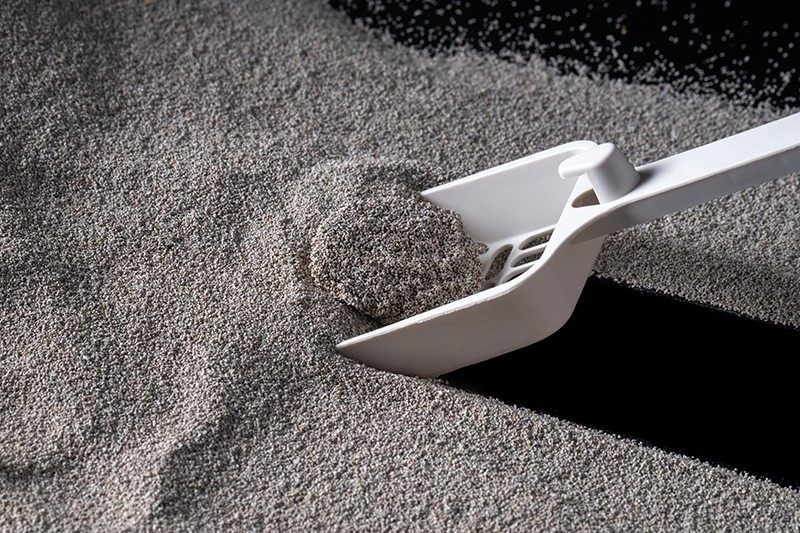
For brands sourcing Natural mineral cat litter ODM, formula stability is the key to consistent clumping, dust control, odor absorption, and customer satisfaction. From raw bentonite purity to moisture balance and processing standards, every factor matters. This guide explains what buyers should evaluate when selecting a Bentonite clay cat litter OEM service or a Bentonite mineral cat litter wholesale partner for reliable long-term product performance.
Why does formula stability matter so much in natural mineral cat litter ODM?
In the pet supplies industry, formula stability is not only a technical topic. It directly affects how cat litter performs in households, retail channels, and distribution networks. If one production lot clumps firmly while the next lot breaks apart, users notice it immediately. For procurement teams, this means complaint risk, return pressure, and weak brand consistency across different markets.
For Natural mineral cat litter ODM projects, stability usually means that the same formula keeps similar behavior across 3 core dimensions: clumping speed, dust level, and odor control. In practical sourcing, buyers often review 4 to 6 key checks before approving a supplier: raw mineral consistency, moisture control, granule grading, mixing process, packaging protection, and batch inspection records.
This issue is especially important for private label and OEM business because the product is expected to perform the same over repeated orders, often every month or every quarter. A stable formula helps technical evaluators reduce revalidation work. It also helps finance and management teams avoid hidden costs caused by replacement inventory, rework, and freight losses after shipment.
For distributors, brand owners, and end users, unstable bentonite cat litter usually appears in simple ways: weaker clumps after transport, increased dust after storage, or noticeable performance gaps between small-batch and large-batch production. These are not isolated events. They usually trace back to material source variation, poorly managed water content, or inconsistent manufacturing discipline.
- Stable formula means predictable consumer experience across repeated purchases.
- Stable formula reduces quality disputes between purchasing, QC, and sales teams.
- Stable formula supports long-term ODM cooperation, especially for export programs with 2 to 4 week lead-time planning.
What buyers usually mean by “stable”
In practical procurement language, stable does not mean one lab result on one day. It means repeatable output over time. A bentonite clay cat litter OEM supplier should maintain similar granule behavior over multiple lots, not just a single sample. That is why experienced buyers compare at least 2 to 3 batches before confirming a long-term formula.
For operating staff and after-sales teams, stability also includes packaging endurance. If a product leaves the factory in good condition but absorbs moisture during storage or sea freight, clumping and pouring performance can change. So formula stability always includes both internal composition and external protection.
Typical quality signals to monitor
During supplier screening, quality teams often focus on 5 visible signals: dust release when pouring, clump compactness after liquid contact, granule uniformity, odor absorption during the first 24 hours, and bag condition after warehousing. These signals are easier to observe than complex lab language and help cross-functional teams make faster decisions.
Which technical factors affect formula stability in bentonite cat litter?
The first and most decisive factor is raw bentonite quality. Natural mineral deposits are not identical, even within the same region. Purity, swelling behavior, impurity level, and mineral composition can vary from layer to layer. For this reason, a manufacturer with a dedicated mine and long-term extraction experience often has a better chance of controlling source fluctuation than a trader relying on changing external suppliers.
Moisture balance is the second critical factor. Bentonite cat litter needs an appropriate processing moisture range to maintain granule shape and clumping response. If material is too dry, dust may increase and clumps may become brittle. If it is too moist, granules may soften during storage. In real production, even a small moisture shift during drying, cooling, or packing can affect shipment consistency.
Particle size grading also matters. Buyers often focus on appearance, but grading directly affects pourability, dust tendency, and clump density. A mixed granule profile without control can lead to uneven performance. Very fine particles may raise dust, while overly coarse particles may slow liquid absorption. Stable ODM supply requires a controlled size distribution from screening through final blending.
Processing discipline is the fourth major factor. The same raw formula can behave differently if crushing, sieving, mixing, drying, or packing conditions change between shifts. This is why technical assessment should include production workflow, in-process inspection frequency, and lot traceability, not just a finished sample review.
The table below summarizes the main factors that influence formula stability in Natural mineral cat litter ODM projects and explains what each team should verify before approving a supplier.
For technical evaluators and QC managers, this table highlights an important point: formula stability is never controlled by one single indicator. It is the result of source management, process control, and storage protection working together. When any one of these steps is weak, downstream complaints often follow within the next 1 to 3 shipment cycles.
Why mine ownership and production background matter
Weifang Hualong Bentonite Co., Ltd. has roots going back to 1972, with its predecessor as a bentonite mine. This matters for ODM buyers because upstream control often supports more predictable raw material selection. The company is located in a bentonite-rich area in Weifang, Shandong, and operates with complete national mineral approval qualifications and an exclusive mine covering more than 80,000 square meters.
For B2B buyers, this kind of source advantage can reduce one common risk in Bentonite mineral cat litter wholesale: raw material substitution. A manufacturer with mining background can usually coordinate extraction, grading, and production more closely than suppliers who purchase variable material from multiple channels. That is particularly valuable when a brand wants to keep the same formula over 6 to 12 months of repeated ordering.
How should procurement and technical teams evaluate supplier stability before placing ODM orders?
Many purchasing decisions fail because teams only compare sample appearance and unit price. In reality, Natural mineral cat litter ODM evaluation should combine technical, commercial, and operational review. A useful method is to divide supplier assessment into 3 stages: sample validation, factory capability review, and pilot-order performance tracking. This gives a more realistic picture than a one-time sample test alone.
Sample validation should cover more than one bag. Buyers should request representative samples from at least 2 production moments, if possible, rather than one prepared showcase sample. Teams can then compare dust release, clump compactness, odor response, and granule uniformity under the same test conditions. Even simple side-by-side observation can reveal instability early.
Factory review should focus on process repeatability. Ask how the supplier controls raw material intake, drying conditions, sieve grading, packaging integrity, and lot records. For export projects, also ask about storage duration before loading and the distance or time between production and port dispatch. These details influence whether a product arrives in similar condition after 7 to 30 days of logistics movement.
Pilot-order tracking is where many hidden issues appear. A first bulk order should be treated as a controlled evaluation step. Quality managers can monitor complaint rate, warehouse dust, and clump performance over the first 2 to 6 weeks after arrival. If a supplier performs well at this stage, long-term cooperation becomes much safer.
A practical supplier screening checklist
The following table can be used by procurement teams, project managers, QC staff, and business approvers to align decision criteria before starting a Bentonite clay cat litter OEM program.
This checklist helps different departments speak the same language. Procurement can discuss cost and lead time, while QC checks stability signals and management reviews supply security. A stronger decision process usually reduces expensive surprises after launch.
Four steps for a lower-risk ODM project
- Define 3 to 5 non-negotiable product targets, such as clumping response, dust expectation, granule size range, and package format.
- Review at least 2 sample rounds if the project includes fragrance, color, or special retail positioning.
- Use a pilot order before committing to continuous monthly or quarterly purchase planning.
- Keep retention samples and lot records for comparison when the next shipment arrives.
What common risks make cat litter formulas unstable after production?
Even if the formula looks correct during production, stability can still be lost later. One common risk is poor packaging barrier performance. Natural mineral litter can react to storage humidity, especially during long warehouse periods or ocean shipping. If sealing is weak or pallet protection is poor, the litter may absorb moisture and show different clumping behavior by the time it reaches the customer.
Another risk is overemphasis on low cost. Some buyers ask for lower pricing without defining acceptable quality limits. This can create pressure on material grading, processing time, or dust control steps. In a Bentonite mineral cat litter wholesale program, a lower ex-factory cost may later produce higher total cost through complaints, retailer penalties, repacking, or damaged brand trust.
A third risk is changing too many variables at once. For example, modifying granule size, fragrance, and bag material in one project cycle makes root-cause analysis difficult if performance shifts. A more reliable method is phased change control. Adjust one or two variables, validate results, then proceed to the next step over a 2 to 4 week review period.
There is also a communication risk between business and technical teams. Sales may describe a product as “low dust” or “strong clumping,” but without agreed test language these terms remain subjective. Good ODM partners help customers translate market claims into controllable specifications and inspection points.
Misconceptions that often lead to wrong supplier choices
- Assuming one attractive sample guarantees stable bulk supply. It does not. Buyers should compare multiple lots or pilot bulk output.
- Treating dust control as a single issue. In fact, dust can come from raw fines, dry processing, handling, and transport vibration.
- Ignoring warehouse and container conditions. Formula stability depends on post-production handling as much as manufacturing itself.
- Evaluating only price per bag instead of total cost over 6 to 12 months of brand operation.
How to reduce post-shipment variation
Teams can reduce risk through 5 simple controls: confirm moisture-sensitive packaging, review warehouse storage time, use pallet wrapping suitable for export, define lot coding clearly, and inspect goods upon arrival. These steps are practical for distributors, importers, and project managers who need predictable results after transit.
Location also supports logistics reliability. Weifang Hualong Bentonite Co., Ltd. is situated within the one-hour economic circle of Qingdao Port and Weifang Port, which can help export planning efficiency. For overseas buyers, smoother inland-to-port coordination may support more predictable scheduling, especially when shipment timing affects packaging condition and storage turnover.
FAQ for buyers evaluating natural mineral cat litter ODM partners
How many sample rounds are usually needed before bulk production?
For standard unscented bentonite litter, 1 to 2 rounds may be enough if the target specification is clear. For customized ODM projects involving fragrance, granule adjustment, pack redesign, or special market positioning, 2 to 4 rounds are more common. The key is not the number itself, but whether each round tests one clear variable.
What should procurement teams prioritize: price, clumping, or dust?
They should prioritize the combination that fits the target market. Economy channels may accept simpler packaging and basic features, while premium retail or e-commerce brands often need stronger balance across clumping, dust control, and appearance. A good sourcing decision compares total business impact, not only initial unit cost.
How long does an ODM cat litter project usually take?
A practical timeline may include 1 to 2 weeks for requirement confirmation and sample discussion, another 1 to 3 weeks for sample validation and adjustment, then bulk scheduling depending on order size and packaging complexity. If artwork, bag material, or export coordination is involved, the full cycle may extend further. Buyers should confirm planning windows early.
What documents or proof should quality teams request?
Quality teams should request basic batch identification records, internal inspection items, packaging details, and any general compliance information relevant to the destination market. They should also ask how retention samples are handled and how lot variation is tracked. These are practical controls, even when no special market-specific certification is required.
Why choose a mining-based manufacturer for long-term ODM cooperation?
For buyers looking beyond one-time trading, a mining-based manufacturer can offer a stronger foundation for formula stability. Weifang Hualong Bentonite Co., Ltd. combines long industry history since 1972, an exclusive mine, and specialization in bentonite mineral cat litter products. This kind of integrated background is relevant when your project needs repeatability, not just a competitive first quote.
The company’s location in a bentonite-rich region and its export-oriented sales support through Weifang Tianwu Import and Export Trading Co., Ltd. can be useful for international buyers comparing OEM and ODM options. For brand owners, distributors, and procurement departments, the advantage is not only production. It is also upstream resource control, coordination efficiency, and clearer communication from sampling to shipment.
If your team is evaluating Natural mineral cat litter ODM for private label, retail, wholesale, or distribution, the most useful next step is to clarify 6 items: target market, clumping expectation, dust target, granule preference, packaging format, and estimated order cycle. With that information, discussions become more efficient and technical recommendations become more accurate.
You can consult on sample support, product selection, formula matching, packing options, lead-time planning, and batch consistency review based on your market needs. For buyers who want to explore supply capability further, you may also review Cat litter manufacturer as a starting point for ODM and OEM discussion.
Leave A Message
CONTACT US