


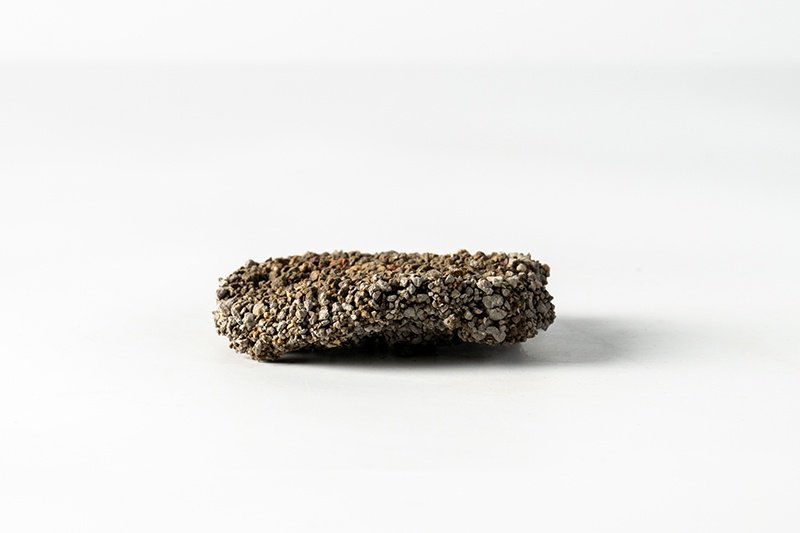
Many pet owners ask, Does dust free cat litter cause respiratory issues? The answer can be more complex than the label suggests. Even low-dust litter may release fine particles, scents, or allergens that irritate sensitive cats and people. Understanding why this happens is the first step to choosing a safer litter and creating a cleaner, healthier home environment.
Why can “dust free” litter still bother the nose, throat, and lungs?
The phrase “dust free” often means reduced visible dust, not the complete absence of airborne particles. This is why people researching, Does dust free cat litter cause respiratory issues?, often find mixed user experiences.
In cat litter, airway irritation may come from very fine mineral particles, added fragrance, deodorizing chemicals, or even proteins and waste residue stirred up during digging and scooping.
What “dust free” usually means in practice
- It typically refers to lower dust during pouring, not zero emissions during use.
- Some products control larger dust particles well but still release ultrafine particles that stay airborne longer.
- Dust levels may change after transport, long storage, repeated scooping, or when litter granules break down in the box.
For information seekers, the key lesson is simple: low-dust labeling is helpful, but it is not the same as a respiratory safety guarantee for every household or every cat.
Does dust free cat litter cause respiratory issues? Main triggers to evaluate
When buyers compare formulas, they should look beyond marketing terms. The following table shows why a low-dust litter can still create breathing discomfort under real home conditions.
This comparison explains why the question, Does dust free cat litter cause respiratory issues?, should be answered by looking at the full system: raw material, processing, additives, litter box behavior, and home ventilation.
Who is more likely to notice irritation?
- Cats with asthma, frequent sneezing, watery eyes, or known sensitivities.
- Households with children, older adults, or people with allergies.
- Small apartments where the litter box is near living or sleeping areas.
- Multi-cat homes where litter is disturbed many times each day.
How bentonite litter performs compared with other common litter types
Bentonite clumping litter remains popular because it forms firm clumps, absorbs quickly, and simplifies daily cleaning. Still, different materials create different trade-offs in dust, odor control, and handling.
For buyers comparing options, this table gives a practical view of where respiratory concerns may still appear.
There is no universal winner. The better question is which litter balances low airborne irritation, odor control, clump strength, and cat acceptance for your specific environment.
Why bentonite still matters in the pet supplies market
Bentonite remains a leading category because strong clumping reduces wet residue left in the box. That matters because leftover moisture and waste can contribute to odor buildup and secondary airborne irritation.
In other words, a well-made bentonite litter can help air quality indirectly by making boxes easier to keep clean, even though dust control still requires careful material and process management.
What technical factors should buyers and importers review?
If you are sourcing cat litter for a brand, retail line, or distributor business, the question, Does dust free cat litter cause respiratory issues?, should lead to measurable evaluation points rather than packaging claims alone.
Key performance indicators to discuss with a supplier
- Raw mineral consistency. Stable bentonite quality helps control absorbency, granule integrity, and clump behavior from batch to batch.
- Particle size distribution. Oversized variation can increase breakage, while too many fines can increase airborne dust.
- Drying and screening process. Proper processing reduces residual fine powder before packing.
- Clump strength under use. Strong clumps reduce crumbling during scooping, which helps keep the box cleaner and less dusty over time.
- Fragrance policy. Unscented or lightly treated formulas are often preferred for sensitive households.
These details are especially relevant for private label programs. A litter that looks low-dust in a sample bag may behave differently after ocean shipping, warehouse handling, and retail turnover.
How to choose a safer low-dust litter for different use scenarios
Choosing the right product depends on who will use it, how often the box is disturbed, and how much sensitivity exists in the home. A one-size-fits-all answer rarely works.
The table below helps information researchers and procurement teams match litter features to common scenarios in the pet supplies market.
A scenario-based approach avoids a common mistake: judging litter only by label claims instead of matching product behavior to the home or market channel.
Quick decision checklist
- Choose unscented if the cat or owner is already sensitive to airborne irritants.
- Check whether the litter keeps clumps intact during scooping.
- Review how the product performs after transport, not only right after factory packing.
- Use enough litter depth to reduce hard contact with the tray bottom and minimize breakage.
Why manufacturing source and mineral control make a difference
In bentonite litter, source quality is not a minor detail. It affects the stability of absorbency, clump formation, screening performance, and resistance to breakdown during logistics and daily use.
Weifang Hualong Bentonite Co., Ltd. was founded in 1972, with its predecessor being a bentonite mine. The company specializes in bentonite mineral cat litter products and operates with complete national mineral approval qualifications and its own mine resources.
With an area of over 80,000 square meters and a location in Weifang, Shandong, rich in bentonite deposits, the company benefits from direct access to raw materials. This matters for buyers who care about consistency rather than spot-market uncertainty.
Its location within the one-hour economic circle of Qingdao Port and Weifang Port also supports export logistics. For overseas buyers, this can help when discussing lead time planning, shipment coordination, and stable international supply.
What this means for OEM and ODM customers
- Better alignment between formula design and raw material behavior.
- More efficient communication on packaging, product positioning, and market-specific needs.
- A clearer path for custom low-dust, unscented, or channel-targeted bentonite litter development.
To expand international business, the group also established Weifang Tianwu Import and Export Trading Co., Ltd. for specialized sales of bentonite mineral cat litter products, which is relevant for importers seeking direct communication on export orders.
Common mistakes that make low-dust litter feel worse than it should
Sometimes the litter is not the only reason a user asks, Does dust free cat litter cause respiratory issues? Daily handling methods can magnify problems even with a decent product.
Frequent mistakes at home or in product testing
- Pouring litter from a height, which sends fines into the air immediately.
- Using too little litter depth, leading to faster granule fracture and tray scraping.
- Skipping daily scooping, allowing urine and waste residue to dry and break apart.
- Placing the litter box in a sealed corner with weak airflow.
- Choosing heavy fragrance to solve odor, which can create a second irritation source.
Correcting these factors often improves the result faster than changing litter brands repeatedly without a structured evaluation.
FAQ: practical answers for buyers and pet owners
How can I tell whether a cat litter is truly low dust?
Check behavior during pouring, digging, and scooping, not just the first visual impression. Ask for sample testing, review granule uniformity, and compare how much residue collects around the box after several days.
Does dust free cat litter cause respiratory issues in cats more than in humans?
It can affect both, but cats are closer to the litter surface and may inhale more disturbance during digging. Sensitive cats may show sneezing, avoidance, watery eyes, or coughing earlier than people do.
Is unscented always a better choice?
Not always, but for homes with known sensitivities, unscented is often a safer starting point. Odor control should ideally come from absorption, clumping efficiency, and cleaning frequency rather than heavy perfume.
What should importers ask a bentonite litter supplier before ordering?
Discuss raw material source, particle size consistency, packaging options, OEM or ODM capability, dust control process, clump performance, and how the product holds up after shipment and storage.
Can a better litter box setup reduce respiratory irritation?
Yes. Good ventilation, regular scooping, proper litter depth, and avoiding overly enclosed humid spaces can reduce airborne residue and make even low-dust products perform closer to expectations.
Why choose us for bentonite cat litter sourcing and product development?
If you are researching Does dust free cat litter cause respiratory issues? because you need a more dependable product strategy, supplier selection matters. A manufacturer with mine resources, long industry history, and export-oriented support can make evaluation more practical.
Weifang Hualong Bentonite Co., Ltd. focuses on bentonite mineral cat litter manufacturing, with its own mine, long-standing production background since 1972, and support for OEM and ODM cooperation. This creates a stronger basis for discussing product consistency and market-fit solutions.
You can contact the team to discuss specific topics such as particle size preference, unscented or market-targeted product selection, packaging customization, delivery schedule planning, sample support, export coordination, and quotation details for your distribution or private label project.
For buyers who need a clearer path from product research to sourcing decision, direct communication on parameters, application scenarios, and shipment requirements is often the fastest way to reduce trial-and-error costs.
Leave A Message
CONTACT US