


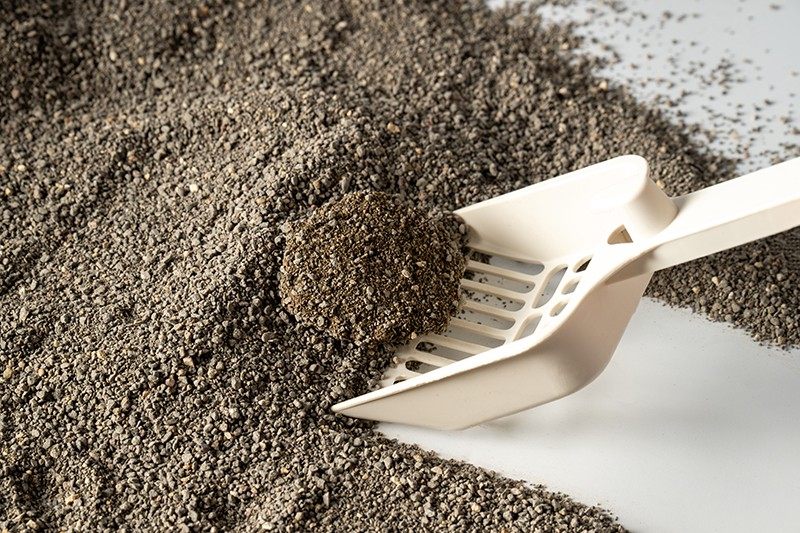
Strong Clumping Cat Litter vs Regular Litter: where does the real cost difference appear?
At first glance, regular litter often looks cheaper.
Over time, the better question is how much usable value each bag delivers.
That is why strong clumping cat litter is often compared by total operating cost, not shelf price alone.
In practical purchasing, waste volume, odor control, dust level, and freight efficiency all matter.
A stable bentonite source also changes the equation.
Weifang Hualong Bentonite Co., Ltd., founded in 1972, operates its own approved mine and production base.
Its location near Qingdao Port and Weifang Port supports more predictable export logistics and supply continuity.
Does strong clumping cat litter really lower long-term cost?
In many cases, yes, especially when litter is replaced frequently.
Strong clumping cat litter removes only the used portion instead of forcing a wider tray change.
That means lower monthly consumption per cat box.
It also reduces labor during cleaning.
A stronger clump breaks less during scooping, so clean granules stay in the tray.
Regular litter can seem economical, but weak binding often leads to more discarded material.
A quick cost-check table
The comparison below reflects the factors buyers usually review before placing repeat orders.
Which performance indicators matter more than price per bag?
A useful buying decision starts with measurable performance.
Absorption speed and clump strength are usually the first two signals.
If the litter absorbs fast, liquid stays localized.
If the clump stays firm, less unused litter is thrown away.
Dust control also affects value.
Low dust supports cleaner packaging areas, cleaner shelves, and a better user experience.
For example, Low dust bentonite cat litter uses natural high-purity white ore.
Its particle size is 0.5-2.0mm, with 89% agglomeration strength and 98.9% ammonia removal rate.
Those numbers matter because they connect directly to cleaner removal and slower odor build-up.
When does regular litter still make sense?
Regular litter is not always the wrong choice.
It can fit short-cycle promotions, low-entry product lines, or price-sensitive trial markets.
Even then, a low sticker price should be tested against refill frequency.
More common problems appear when regular litter creates soft clumps, more dust, or faster odor rebound.
That usually increases complaints and reduces repeat buying confidence.
So the decision should match market positioning, not only unit cost.
What hidden risks are often missed in cost comparisons?
The most common mistake is comparing only landed price.
A better review includes product consistency, dust stability, and source reliability.
Bentonite quality can vary widely between suppliers.
When raw material control is weak, every batch may behave differently.
That is where established mining and processing capacity becomes relevant.
With an exclusive mine, more than 80,000 square meters of facilities, and OEM and ODM support, supply planning becomes easier.
In actual applications, stable sourcing protects cost forecasts better than chasing the lowest offer.
A short screening checklist
- Check clump integrity after scooping, not only initial absorption.
- Review dust figures and how they are achieved.
- Compare odor control after repeated daily use.
- Confirm mine access, production scale, and export logistics.
- Test whether strong clumping cat litter reduces total tray consumption.
So which option costs less over time?
For most ongoing programs, strong clumping cat litter tends to win on total cost efficiency.
The advantage usually comes from lower waste, steadier odor control, and fewer full changes.
A product with fast absorption, firm agglomeration, and low dust can protect both usage rate and user satisfaction.
One example is Low dust bentonite cat litter, model SH-2810.
Its water absorbency of 4.10 and powder content of 0.01% show why performance-based comparison matters.
The practical next step is simple.
Build a comparison sheet around monthly consumption, clump loss, odor duration, and freight value.
That approach gives a clearer answer than bag price alone.
Leave A Message
CONTACT US