


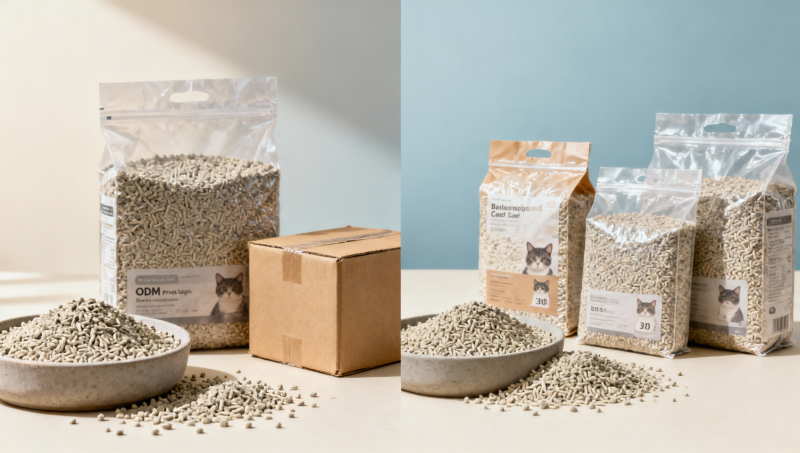
Planning your 2026 cat litter line means choosing the right partner for quality, scalability, and branding. Whether you need Natural mineral cat litter ODM, a reliable Bentonite clay cat litter OEM service, or stable Bentonite mineral cat litter wholesale supply, working with an experienced manufacturer can reduce risk and improve market competitiveness. This guide helps buyers compare private label and ODM options with confidence.
For importers, brand owners, distributors, quality teams, and procurement managers, the choice is no longer only about price per ton. In 2026, buyers are comparing raw material control, formula stability, packaging flexibility, delivery rhythm, dust performance, clumping behavior, and long-term supply security. A natural mineral cat litter program that looks economical at the quotation stage can become expensive if quality fluctuates across batches or if port schedules disrupt replenishment.
That is why many buyers are now evaluating factory depth before discussing label design. A manufacturer with upstream bentonite resources, processing experience, and export coordination can support both private label and ODM projects more efficiently. Weifang Hualong Bentonite Co., Ltd., founded in 1972 with roots in a bentonite mine, operates in a bentonite-rich area of Shandong and serves overseas business through Weifang Tianwu Import and Export Trading Co., Ltd., focusing on bentonite mineral cat litter supply for global markets.
Why 2026 Buyers Are Reassessing ODM and Private Label Cat Litter
The cat litter market is becoming more segmented. Retailers and online sellers now need clearer product positioning within 3 common lanes: value, mainstream, and premium. In this environment, a simple OEM fill-and-pack service may work for a mature SKU, but it may not be enough for brands that want differentiated particle size, odor-control additives, lower dust targets, or custom packaging formats for e-commerce and retail shelves.
Private label is often the faster route when a buyer already knows the target product. It usually focuses on using an existing formula and adapting branding elements such as bag artwork, carton marks, barcode placement, and pallet labels. This can shorten launch preparation to roughly 2–6 weeks after artwork approval, depending on packaging readiness, MOQ, and order queue.
ODM is more suitable when a customer wants product development support in addition to manufacturing. That may include selecting sodium or calcium bentonite-based performance ranges, adjusting granule distribution such as 0.5–2.0 mm or 1.0–3.5 mm, testing scent options, or matching clumping speed to target markets. ODM projects typically require more communication and sample rounds, often 3–8 weeks for evaluation before mass production is confirmed.
For technical evaluators and quality teams, the key difference is responsibility depth. In OEM or private label, the buyer normally defines more of the product target. In ODM, the factory contributes more heavily to formulation advice, manufacturability, and packaging feasibility. For finance and commercial teams, that difference affects development cost, time to market, and inventory risk.
Key market drivers behind the shift
- More brands are launching 2–4 litter variants instead of a single standard SKU.
- Dust sensitivity and indoor odor control have become major consumer concerns.
- E-commerce packaging now requires stronger bag sealing and better transport resistance.
- Importers increasingly want stable replenishment windows, often every 30–60 days.
The table below helps decision-makers compare the two models using practical procurement and product-development criteria rather than general labels.
In practice, many buyers start with private label for the first shipment and move toward ODM once sales data clarifies which claims matter most. This staged approach reduces launch pressure while preserving future differentiation.
How to Evaluate a Natural Mineral Cat Litter Manufacturer
Factory selection should begin upstream. In bentonite cat litter, resource control matters because mineral consistency influences clumping, absorbency, color tone, and dust behavior. A producer with its own mine or direct access to stable deposits generally has better control over raw material variability than a trader dependent on changing outside sources. This is especially relevant for annual purchase plans, distributor agreements, and repeat container orders.
Weifang Hualong Bentonite Co., Ltd. traces its origin to 1972 and developed from a bentonite mine. The company states that it holds complete national mineral approval qualifications and operates an exclusive mine covering more than 80,000 square meters. For buyers, this background is important not as a marketing phrase, but as a practical indicator that raw material supply, mineral traceability, and production planning can be aligned more directly.
Location also affects delivery performance. The company is located in Jiulong Industrial Park, Fangzi District, Weifang, Shandong, within the one-hour economic circle of Qingdao Port and Weifang Port. For export projects, this can help simplify trucking coordination, shorten inland transit relative to some inland factories, and create more flexibility when shipment plans change within a 7–10 day booking window.
However, procurement should not stop at origin and distance. Buyers should also evaluate batch control, packaging capabilities, response speed, export communication, and sampling discipline. An experienced manufacturer can still fail a project if specification alignment is weak. For this reason, technical teams, project managers, and quality departments should use a structured checklist before approving mass production.
A practical 6-point supplier screening framework
- Verify raw material source stability and whether the factory controls mining or long-term deposit access.
- Request standard product ranges, including granule size, scent options, and packaging formats.
- Confirm sample lead time, mass production lead time, and realistic shipping coordination cycle.
- Review quality inspection items such as moisture, dust level, clumping behavior, and foreign matter screening.
- Check export support, document handling, and communication ability for multi-department projects.
- Discuss ODM or OEM scope clearly, including who owns artwork, formula target, and revision responsibility.
The following table can be used by sourcing teams and business evaluators when comparing 2–3 suppliers during the decision phase.
A manufacturer with controlled mineral resources, export-oriented sales support, and a clear OEM/ODM process is usually better positioned for long-term cooperation than a low-price supplier offering unclear specifications.
ODM vs Private Label: Which Model Fits Your Business Type?
Different buyer groups need different cooperation models. A distributor entering a new country may need stable Bentonite mineral cat litter wholesale supply in standard 5 kg, 10 kg, or 20 kg bags with fast execution. A digital-first pet brand, by contrast, may want a unique private label look with performance claims focused on low dust, strong clumping, or scent selection. A chain store may prefer simplified range management with 2 core SKUs and strict packaging compliance.
Private label often fits buyers who already understand their sales channels and only need dependable manufacturing. This model is efficient for replacement sourcing, regional supermarket supply, and dealer expansion where the product brief is clear. It works particularly well when the market accepts standard bentonite litter specifications and the main competitive lever is branding, carton consolidation, or landed cost control.
ODM is more suitable when product definition is still evolving. For example, a brand may discover that one country prefers finer particles for softer paw feel while another market prefers larger granules to reduce tracking. In such cases, ODM support allows sampling, consumer testing, and packaging adaptation before scaling. This approach is also useful when a buyer wants to move from a generic bentonite product to a better-positioned natural mineral cat litter portfolio in 2026.
Commercially, the decision also depends on order volume and speed expectations. If your first order is small and time-sensitive, private label may reduce delay. If your 12-month plan involves repeat orders, distributor rollouts, or multi-market launches, ODM may offer a stronger long-term return despite requiring more preparation in the first 30–45 days.
Business scenarios and recommended model
The table below maps common buyer profiles to recommended cooperation structures. It is especially useful for project owners, procurement teams, and decision-makers who need alignment across technical, sales, and finance departments.
A hybrid strategy is often the most practical. Many buyers launch a standard SKU under private label, test sales for 1–2 quarters, then create a second line through ODM based on real complaints and repeat-purchase data. This reduces misjudgment and improves investment efficiency.
Common mistakes to avoid
- Choosing ODM when you have not yet defined target users, price band, or claim priorities.
- Choosing OEM only by unit price without clarifying dust range, clumping expectation, or bag durability.
- Ignoring sales channel needs, such as retail display requirements versus warehouse club packaging.
Key Product, Quality, and Delivery Factors for Bentonite Cat Litter Projects
In bentonite clay cat litter sourcing, the product must work at 3 levels: pet use performance, retail presentation, and supply chain practicality. End users care about clumping strength, odor control, low dust, and tracking behavior. Importers care about repeatability from lot to lot. Quality and safety personnel care about contamination control, packaging integrity, and complaint handling. A good project succeeds only when these three levels align.
From a technical standpoint, buyers should request clear specification ranges rather than vague statements. Useful items include granule size distribution, moisture range, fragrance option, bag weight tolerance, and inspection method. Even when market standards vary, defining acceptable ranges early can prevent disputes after loading. For example, a 10 kg bag program should have an agreed filling tolerance and seal strength requirement before artwork approval and purchase order release.
Delivery planning is equally important. For many export orders, the timeline includes sample confirmation, packaging proofing, production scheduling, loading, and port dispatch. A realistic total cycle may be 3–7 weeks depending on customization level, packaging availability, and shipping season. Buyers planning a 2026 launch should build a buffer of at least 2 weeks for first-order coordination, especially when entering new channels or countries.
For buyers working with Weifang-based supply, the location near Qingdao Port and Weifang Port can support export planning efficiency. Still, port convenience does not replace specification discipline. The best results usually come when buyers approve a full pre-production checklist covering formula target, bag structure, label language, pallet pattern, and claim wording before production starts.
Typical checkpoints before mass production
- Sample confirmation in at least 1–2 rounds if performance is customized.
- Bag design approval including front, back, side marks, and shipping marks.
- Clear agreement on palletization, container loading, and outer carton or woven bag requirements.
- Batch inspection items defined before the first container leaves the factory.
The table below summarizes common project variables and why they matter for quality and supply stability.
When these checkpoints are documented early, quality teams and project managers can work faster, and commercial teams can quote customers with greater confidence.
Implementation Tips, Risk Control, and FAQs for 2026 Sourcing
A successful 2026 sourcing project is usually built in stages rather than rushed in one step. First, define the target market and price band. Second, select whether OEM, private label, or ODM is the right route. Third, complete sample validation and packaging review. Fourth, confirm production and shipping rhythm. This 4-step structure is simple, but it prevents many common disputes around specifications, packaging, and replenishment timing.
Risk control should include both product and business factors. Product risks include unstable clumping, excessive fines, scent mismatch, or bag breakage during handling. Business risks include unclear MOQ, unrealistic lead times, and artwork delays. For first cooperation, many buyers reduce exposure by starting with one container program, one or two SKUs, and a clearly documented approval file before expanding to a quarterly or annual plan.
For distributors, after-sales teams, and quality personnel, complaint handling should also be considered before the first shipment. Keep retention samples from approved batches, define visual and functional checkpoints, and set a response path for any issue reported within the first 30–60 days after arrival. This process improves accountability and helps identify whether a problem comes from product, packaging, transport, or storage.
Because bentonite mineral cat litter remains a practical and scalable category, the best supplier relationships in 2026 will be those built on transparency, repeatability, and flexible cooperation models. A mine-backed manufacturer with export support can be valuable not only for current orders but also for future portfolio expansion across standard, scented, and premium lines.
FAQ: How do buyers usually choose between ODM and private label?
If the buyer already has a clear product target, packaging concept, and channel strategy, private label is often the faster and simpler option. If the buyer needs help defining performance and positioning, ODM is often more suitable. Many projects start with private label and shift to ODM after 1–2 sales cycles.
FAQ: What lead time should importers plan for a first order?
A practical planning window is often 3–7 weeks from final confirmation to shipment readiness, depending on packaging customization, sample rounds, and seasonal booking pressure. Adding a 2-week buffer is wise for a first project or a new market launch.
FAQ: Which teams should join the supplier evaluation?
At minimum, involve procurement, quality, and commercial stakeholders. For larger projects, also include finance, packaging, and project management. A 5-person cross-functional review often resolves issues faster than repeated back-and-forth after sampling.
If you are planning a natural mineral cat litter line for 2026, the most effective path is to match the cooperation model to your market stage, then verify the manufacturer’s resource control, production discipline, and export readiness. With mining background, long operating history since 1972, an exclusive mine area of over 80,000 square meters, and export-focused support through Weifang Tianwu Import and Export Trading Co., Ltd., Weifang Hualong Bentonite Co., Ltd. offers a strong foundation for OEM and ODM cooperation in bentonite litter projects.
To explore packaging options, supply planning, or custom development, learn more about Cat litter factory. Contact the team to discuss your 2026 product roadmap, request samples, and get a tailored proposal for private label, ODM, or bulk bentonite cat litter supply.
Leave A Message
CONTACT US