


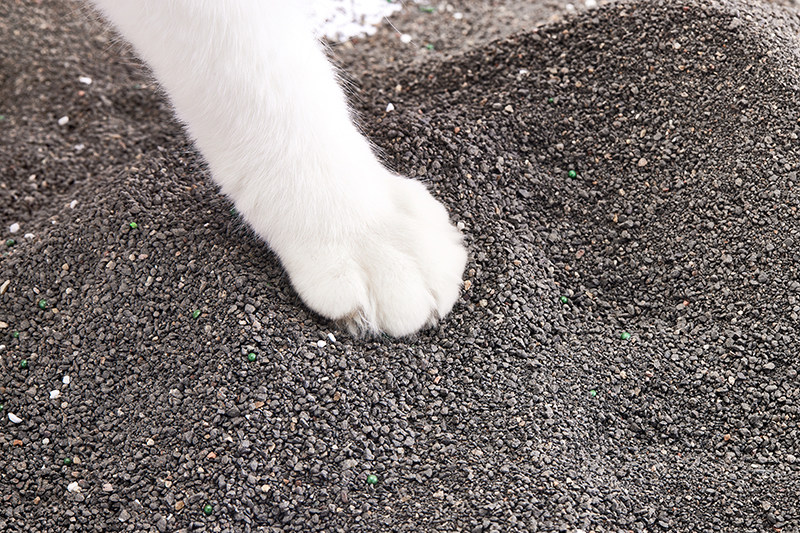
Is mineral cat litter really worth the cost?
For many buyers, mineral cat litter looks simple until daily costs are measured over months, not cartons.
The real decision is rarely about the lowest unit price.
It is about clumping speed, deodorization time, dust behavior, and how often the litter box needs a full change.
Those factors shape labor, consumer satisfaction, and repeat purchase rates.
In practical sourcing, mineral cat litter often performs well because bentonite-based particles absorb quickly and form compact clumps.
That means less wasted litter during scooping and more stable use per bag.
Still, not every mineral formula offers the same value.
Ore quality, processing technology, and dust control methods can create large differences in final cost performance.
This is why long-established producers with direct mine resources often deserve closer attention.
A company founded from a bentonite mine in 1972, with exclusive mining resources and port access near Qingdao and Weifang, usually offers stronger supply continuity.
What daily use trade-offs matter most with mineral cat litter?
The biggest trade-off is easy to miss.
A cheaper litter can cost more if it breaks apart during scooping, leaves odor behind, or creates visible dust in retail feedback.
Good mineral cat litter should support four daily-use expectations.
- Fast liquid absorption, so urine does not spread across the tray.
- Strong clumping, so only used material is removed.
- Stable odor control, especially ammonia reduction.
- Low dust, which improves handling and user acceptance.
In real use, lifespan depends on clump integrity more than marketing claims.
If clumps stay tight, clean litter remains in the tray longer.
If clumps crumble, more unused material gets discarded with each scoop.
That is where technical details become useful.
For example, a product with particle size at 0.5-2.0mm, moisture at 7.96%, and very low powder content can support cleaner daily handling.
When ammonia removal reaches at least 75% and water absorbency reaches at least 1.5, the value discussion becomes more concrete.
How do you compare lifespan, not just bag price?
A useful comparison starts with cost per effective day, not cost per bag.
That means checking how much litter is lost during scooping, how long odor stays controlled, and whether consumers need to replace the full tray early.
The table below helps translate product claims into purchasing judgment.
This is also why source transparency matters.
When a supplier controls its own bentonite mine and processing chain, consistency usually improves.
That reduces the hidden risk of sample quality being better than mass production quality.
Which product details actually signal better value?
Not every technical number matters equally.
The more reliable signals are tied to real user outcomes.
A useful example is Natural mineral cat litter, model SH-2308.
Its off-white appearance comes from selected high-quality natural ore rather than surface treatment.
The formula combines sodium-based activated carbon mineral and montmorillonite, with about 75% montmorillonite content.
That combination is relevant because adsorption and clumping need to work together, not separately.
A near dust-free result is also more credible when it comes from dust-removal technology, not chemical spraying.
In purchasing terms, this can support cleaner packaging lines and more stable end-user feedback.
Certification such as T/SDPIA05-2002 adds another layer of confidence when consistency must be documented.
The point is not to chase every specification.
It is to connect each specification with a practical result in storage, shipping, shelf appeal, and home use.
Where do buyers misjudge mineral cat litter most often?
One common mistake is treating all bentonite litter as interchangeable.
In reality, raw ore purity, processing control, and particle grading change the user experience significantly.
Another mistake is overvaluing a low quotation without checking supply reliability.
For private label or long-term programs, logistics access and factory scale matter.
A producer located within the one-hour economic circle of Qingdao Port and Weifang Port may offer practical export advantages.
That can help with lead time control, especially when seasonal demand increases.
There is also a frequent misunderstanding around dust.
Low initial dust in a sample is not enough.
What matters is dust behavior after transport, handling, and repeated scooping.
- Ask for repeated-use test information, not only fresh-sample results.
- Check whether OEM or ODM support includes particle and fragrance adjustments.
- Confirm mine ownership or raw ore sourcing stability.
- Review whether deodorization claims are tied to measurable data.
When does mineral cat litter make the most sense?
Mineral cat litter is often the better fit when dependable clumping and mainstream consumer familiarity are priorities.
It also makes sense when the goal is a balanced mix of performance, price control, and scalable supply.
This is especially true for programs that need stable export support and customization options.
A supplier with an 80,000-square-meter operation, mineral approval qualifications, and dedicated export sales support can reduce operational friction.
That kind of background matters more than it first appears.
It supports batch consistency, documentation, and faster response when packaging or formula adjustments are needed.
If your comparison is still open, use a short checklist before deciding.
So, is mineral cat litter worth it in the end?
In many cases, yes.
But the value of mineral cat litter depends on whether the product can keep performance stable from shipment to daily use.
The strongest buying decisions usually come from comparing total use cost, clump quality, dust control, deodorization life, and supply security together.
A short sample test is useful, but it should be paired with questions about ore source, batch consistency, port logistics, and customization support.
If you are narrowing options, start by defining the target price band, expected replacement cycle, and acceptable dust level.
Then compare suppliers against those standards, not against bag price alone.
That approach gives a clearer answer to whether mineral cat litter is truly worth it for your program.
Leave A Message
CONTACT US