


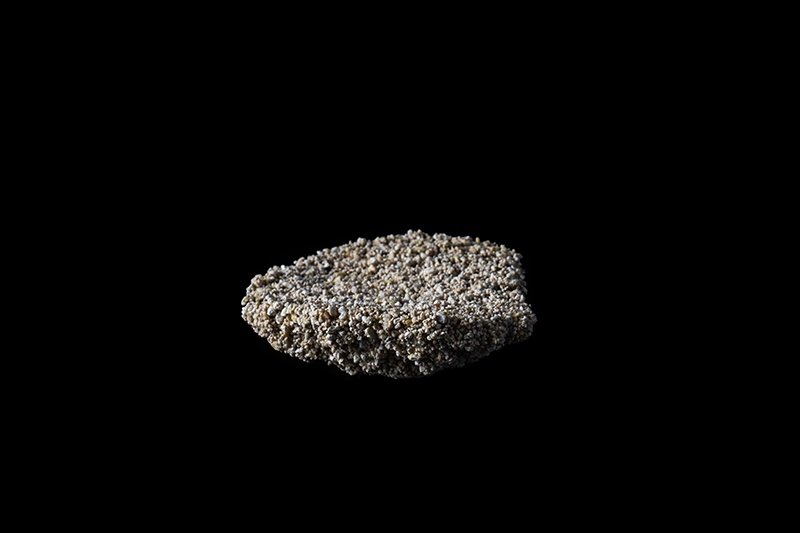
Why do Natural bentonite cat litter non-toxic claims differ so widely across suppliers? For quality control and safety managers, the answer usually comes down to five variables: ore source purity, legal mining and mineral approval status, dust management, additive selection, and the test methods used to support claims. A “non-toxic” statement may sound simple in marketing language, but in procurement and compliance practice, it only becomes meaningful when supported by traceable raw material control, defined specifications, and verifiable test evidence.
For buyers responsible for product safety, private label compliance, or supplier qualification, the key issue is not whether a supplier uses the phrase Natural bentonite cat litter non-toxic. The real issue is what that phrase actually covers, what it excludes, and how consistently the supplier can prove it across production batches. This is especially important in OEM and ODM projects, where labeling, local regulations, and customer expectations can differ by market.
What buyers are really trying to verify behind a “non-toxic” claim
When quality teams search this topic, they are rarely looking for a general definition. They want to know whether the litter contains hazardous substances, whether inhalation risk from dust has been controlled, whether fragrances or deodorizing additives introduce new concerns, and whether the supplier can provide documentation that stands up to an audit. In other words, they are assessing risk, not just product positioning.
That is why claim variation is so common. One supplier may use “non-toxic” to mean the raw bentonite mineral itself is naturally occurring and free from intentionally added harmful chemicals. Another may use it to suggest the finished product is safe in normal household use, even if no unified international standard defines that exact claim for cat litter. Without a shared framework, wording becomes broad while evidence remains uneven.
For safety managers, the practical response is to break the claim into testable components: mineral identity, contaminant profile, respirable dust level, additive safety, microbiological condition where relevant, pH stability, and consistency between specification sheets and production reality. This approach turns vague marketing language into a structured qualification process.
Raw ore purity is the first reason claims differ
Bentonite is not a single uniform material. Its composition depends heavily on the geological deposit, mining controls, and beneficiation process. A supplier operating from a stable mine with consistent montmorillonite content and formal mineral approvals starts from a different safety baseline than a trader buying from multiple unknown ore sources. Even when both products are labeled “natural,” impurity risks can be very different.
Quality teams should pay special attention to heavy metals, unwanted mineral inclusions, and cross-contamination during extraction and storage. Natural does not automatically mean low-risk. In mineral products, naturally occurring impurities can still affect product suitability. A responsible supplier should be able to explain ore origin, mine ownership or sourcing model, and how raw material lots are segregated, sampled, and released.
For example, a manufacturer with its own approved mine and long production history may offer stronger upstream traceability than a supplier relying on opportunistic purchasing. That matters because claim credibility is built long before granulation, drying, packaging, or export. If raw ore control is weak, downstream “non-toxic” language becomes harder to defend.
Legal mining status and mineral approvals affect credibility
Another major reason Natural bentonite cat litter non-toxic claims vary is that not all suppliers operate with the same level of formal qualification. For importers and brand owners, legal mining status is not just a background detail. It affects traceability, regulatory confidence, long-term supply stability, and the reliability of technical declarations submitted during customer audits.
A manufacturer with complete national mineral approval qualifications and a dedicated mine can usually provide more consistent documentation than a company that only assembles finished goods. This matters in OEM and ODM business, where quality files often need to include product specifications, source information, certificates, test reports, and corrective action procedures. If the supplier cannot link the finished litter back to approved mineral extraction, confidence in any safety claim naturally weakens.
In supplier assessment, documentation should go beyond a basic brochure. Buyers should ask for mine qualification evidence, plant quality controls, product standard references, and internal release criteria. The more complete the chain of evidence, the easier it becomes to interpret “non-toxic” as an operationally managed property rather than a generic sales phrase.
Dust control often matters more than marketing language
Many end users interpret “non-toxic” as meaning harmless in every possible exposure scenario. Quality professionals know that this is not how risk works. In bentonite litter, the most practical safety concern is often not acute toxicity from the mineral itself, but inhalation exposure related to dust generation during filling, transport, pouring, and routine use. Two litters with similar mineral composition may present very different user experiences because of dust performance.
This is why particle sizing, moisture control, drying conditions, and fines removal should be part of supplier qualification. A product with good clumping but poor dust suppression may still create complaints or internal risk concerns, especially in enclosed indoor environments. Low visible dust is not enough; buyers should understand how powder content is measured and what the release standard is for shipment.
In product specifications, parameters such as granule size and powder content help translate broad safety claims into measurable performance indicators. For instance, some clumping formulations use a 0.5–2.5 mm particle range and set powder content controls around 0.15 to balance clumping response with lower dust generation. These are the kinds of technical details that matter more than promotional wording when evaluating actual suitability.
Additives are a common source of claim inconsistency
One supplier may sell plain bentonite. Another may add fragrance, activated carbon, deodorizing agents, color particles, or botanical ingredients. Once additives enter the formula, the meaning of Natural bentonite cat litter non-toxic can change significantly. The bentonite itself may be naturally derived, but the finished product’s claim must reflect the full formulation, not just the base mineral.
This is where many buyer misunderstandings begin. A supplier may highlight natural bentonite in front-end marketing while the safety profile depends equally on the additive package. Fragrances can trigger user sensitivity concerns. Some deodorizing components improve odor performance but require separate safety review. Even activated carbon grades can differ in source and processing. Unless the complete bill of materials is controlled, “non-toxic” may only describe part of the product story.
For safety review, request a full additive disclosure at least to the level needed for compliance assessment, along with SDS documents, composition ranges where possible, and confirmation of restricted substance controls. If a supplier refuses to discuss additives while still making broad safety claims, that is a signal to increase scrutiny.
As one example from the market, some formulations combine montmorillonite with sodium-based activated carbon to improve deodorizing performance. In such cases, the buyer should verify not only odor removal efficiency, but also whether the additive source, purity, and dust contribution have been validated in the finished product.
Testing methods are not always comparable across suppliers
Perhaps the biggest reason claims vary is that suppliers often test different things, with different methods, under different reporting formats. One may provide a general SGS-style screen for selected hazardous substances. Another may offer internal data on pH, water absorption, and deodorization only. A third may show compliance to a local product standard but no toxicological summary. All three may still use the same marketing phrase.
For quality control teams, the lesson is simple: never compare “non-toxic” claims without comparing the underlying test scope. Ask what was tested, which laboratory performed the work, what standard or method was used, what the detection limits were, and whether the report applies to the current production formula. Old reports, reports from a different SKU, or reports on raw ore only are not sufficient for finished product qualification.
It is also important to distinguish between absence of evidence and evidence of absence. If a report does not mention heavy metals, crystalline silica fractions, formaldehyde-related substances, or additive residues, that does not mean they were assessed and passed. It only means they were not addressed in the document you received.
How to evaluate OEM and ODM suppliers more effectively
For OEM and ODM projects, claim control becomes even more critical because the importing brand often bears downstream labeling and market compliance responsibility. A buyer should not only ask whether the product is safe, but whether the supplier can manufacture a repeatable version of the agreed specification month after month. Consistency is part of safety.
A practical qualification checklist should include raw ore source traceability, mine or sourcing legality, incoming inspection, additive approval, in-process dust control, batch retention, finished product testing, packaging migration considerations where relevant, and a documented change control process. If the supplier changes ore source, fragrance, carbon grade, or granule size, there should be a formal mechanism to notify the customer before shipment.
Factory capability also matters. A producer with a long manufacturing history, large site area, and direct specialization in bentonite mineral cat litter is generally better positioned to maintain stable processes than a non-specialist exporter. This does not guarantee quality, but it usually improves the odds of stronger process discipline and better corrective action support.
Buyers evaluating export-ready private label options may also review commercially mature products such as Clumping bentonite cat litter when comparing specification transparency, deodorizing performance, and adaptability for different market requirements. The value is not only the product itself, but whether the supplier can explain performance data in a way that supports compliance review.
Which product data points matter most for safety and quality review
Not every technical number carries the same weight. For safety and quality managers, the most useful specification data are those linked to real-world exposure, product stability, and customer complaint risk. Granule size distribution affects dust and clumping behavior. Moisture content affects storage stability and handling. Powder content directly relates to airborne particulates and visible cleanliness. Deodorization rate helps validate performance claims that may otherwise be overstated.
Additional indicators such as ammonia removal rate, water absorption, and binding strength matter because they influence how often the litter is disturbed and replaced during use. Better clumping and odor control can indirectly reduce exposure to loose fines by limiting breakdown in the tray. Some products also cite standard references such as T/SDPIA05-2002, which can be useful, but buyers should still confirm whether the standard covers the same risk areas they care about.
As an illustration, a formula offered in an off-white gray appearance, with strong deodorizing performance, high ammonia removal, and the option to be used alone or blended with cassava, may suit different private label strategies. But the deciding factor for professional buyers is whether each claim can be traced to validated test data and stable manufacturing controls.
Red flags that should trigger deeper supplier review
Several warning signs appear repeatedly in the cat litter market. The first is a broad “non-toxic” claim with no supporting documentation. The second is technical inconsistency between website text, specification sheet, and test report. The third is reluctance to disclose additive categories or ore origin. The fourth is excessive emphasis on price without corresponding process transparency. The fifth is a claim that sounds regulatory, but has no identified standard behind it.
Another red flag is when a supplier cannot explain how dust is measured or controlled. Because dust is one of the most practical safety-related concerns in bentonite litter, a weak answer here usually suggests broader quality system limitations. Similarly, if the supplier cannot confirm whether reports apply to the exact export SKU under discussion, buyers should treat all safety claims cautiously.
Finally, be careful with absolute wording. Terms like “100% safe,” “completely harmless,” or “zero risk” are not realistic quality language. Responsible manufacturers describe controlled risk, intended use, and test-backed conformance. Overstated certainty is often less trustworthy than precise, limited claims supported by data.
A practical conclusion for quality and safety decision-makers
The reason Natural bentonite cat litter non-toxic claims vary is not mysterious. The phrase sits at the intersection of geology, formulation, dust control, documentation, and marketing interpretation. Suppliers differ because their ore sources, process controls, additive systems, and evidence packages differ. For professional buyers, the right response is not to debate wording, but to demand a claim framework that can be audited.
In practical terms, the best supplier is usually the one that can clearly document raw material origin, legal mineral qualifications, additive controls, dust specifications, test scope, and batch consistency for OEM or ODM production. When those elements are in place, a non-toxic positioning becomes more than a slogan. It becomes a manageable quality attribute with lower sourcing risk.
For safety managers and QC teams, the takeaway is clear: evaluate the claim as a system, not a sentence. If you verify the mine, the material, the process, the additives, and the reports, you will make better sourcing decisions and reduce downstream compliance surprises in the pet care market.
Leave A Message
CONTACT US