


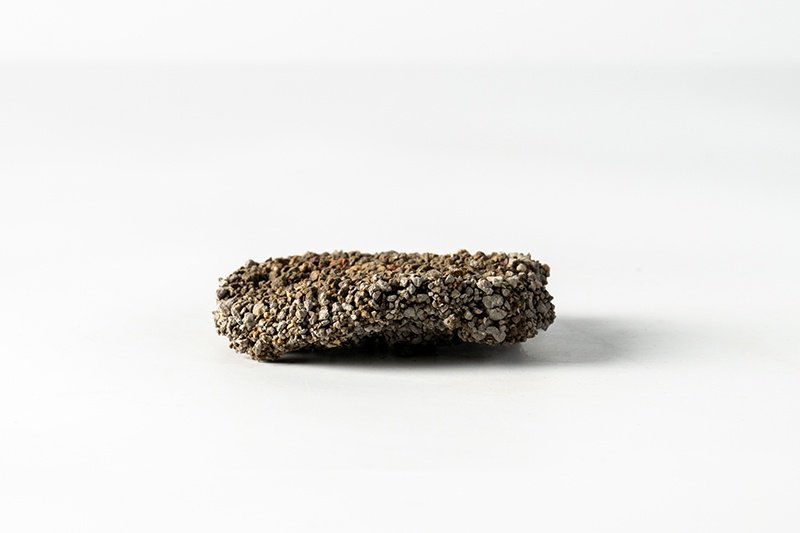
For quality control and safety managers, the key question is: Does customized cat litter have quality checks? The answer must be yes, especially for bentonite-based products intended for stable clumping, low dust, moisture control, and safe daily use. From raw mineral selection to particle size, absorption, hygiene, and packaging consistency, every stage should meet strict standards to ensure product reliability, regulatory compliance, and customer satisfaction.
In today’s pet supplies market, expectations for private-label and tailored cat litter are changing fast. Buyers no longer judge a product only by price or fragrance. They increasingly compare dust performance, clump strength, deodorization, hygiene risk, and shipping consistency. That is why the question “Does customized cat litter have quality checks?” has become central to product development, export readiness, and brand reputation. For bentonite mineral litter, quality control is not a final checkpoint alone; it is a continuous system that starts at the mine and continues through processing, packing, storage, and delivery.
Quality expectations are rising across customized cat litter markets
The pet care industry has shifted toward more specialized demand. Customized cat litter may vary in granule size, fragrance level, clumping speed, color, packaging format, or formula blend for different regions and retail channels. As customization increases, so does the need for precise and documented quality checks. A formula that performs well in one market may fail in another if humidity, user preference, transportation time, or labeling rules differ.
This market shift is especially relevant for bentonite products because bentonite quality depends heavily on mineral purity, swelling behavior, moisture balance, and particle grading. If these factors are inconsistent, the result may be high dust, weak clumps, poor odor control, or unstable shelf performance. So when asking, “Does customized cat litter have quality checks?”, the practical answer is that it must have a full inspection framework adapted to the exact product specification.
The main trend signals behind stricter quality checks
Several signals explain why quality checks for customized cat litter are becoming more important than before. These changes are not temporary. They reflect a broader move toward safer, more reliable, and more differentiated pet products.
What quality checks should customized bentonite cat litter meet?
If the question is “Does customized cat litter have quality checks?”, the more useful follow-up is which checks matter most. For bentonite-based litter, inspection should cover physical performance, hygiene safety, appearance consistency, and packaging reliability. These are the core areas that determine whether the product will meet real-world expectations.
1. Raw bentonite source and mineral stability
The first checkpoint is the raw mineral itself. High-quality bentonite should come from a stable and approved source with consistent swelling and absorption properties. Mine control matters because mineral variation directly affects clumping strength and moisture uptake. Traceability records, impurity monitoring, and incoming raw material inspection are basic requirements for reliable customized cat litter production.
2. Particle size distribution
Customized cat litter often targets a specific granule range, such as fine, standard, or coarse particles. Sieve analysis should confirm that the particle size matches the requested specification. If the range is too broad, users may experience uneven clumping, more dust, or poor box coverage. This is one of the most direct quality checks for customized cat litter.
3. Dust control performance
Low dust is now a major buying factor. Dust testing should evaluate loose powder content during production and after filling. Poor dust control can reduce user satisfaction and create handling problems in storage and retail. For export products, dust performance should remain stable after transportation vibration as well.
4. Water absorption and clumping strength
Bentonite cat litter must absorb moisture quickly and form solid clumps that do not break apart during scooping. Lab checks often include absorption rate, clump formation time, clump hardness, and post-clump integrity. These performance indicators are central to answering “Does customized cat litter have quality checks?” because they reflect the product’s main functional promise.
5. Moisture content and storage stability
Moisture content should remain within a controlled range. Excess moisture can reduce flowability, increase bag weight variation, and affect shelf stability. Overly dry litter may generate more dust. Moisture checks are particularly important for products shipped through ports or stored in humid climates.
6. Odor control and additive consistency
If the customized product includes fragrance, deodorizing agents, activated carbon, or color particles, each additive must be evenly mixed and accurately dosed. Uneven blending may cause visible inconsistency or unstable odor performance. This is especially important for OEM and ODM cat litter programs with market-specific formulas.
7. Hygiene and foreign matter inspection
Although bentonite is a mineral product, hygiene expectations remain high. Quality checks should include foreign matter screening, production cleanliness, and packaging environment management. The goal is to prevent contamination and keep the litter suitable for safe daily pet use.
8. Packaging accuracy and sealing reliability
The product itself can pass every test and still fail in the market if the bag breaks, leaks, or carries incorrect labels. Weight tolerance, seal strength, barcode accuracy, pallet condition, and export mark verification are essential quality checks for customized cat litter.
How these quality checks affect different business stages
The impact of quality checks extends beyond production. At the product design stage, testable specifications help avoid vague requirements like “good clumping” or “less dust.” During manufacturing, in-process controls reduce variation between batches. In warehousing and logistics, moisture monitoring and bag integrity checks prevent losses. At the market level, stable quality supports repeat orders, fewer claims, and stronger brand trust.
For customized projects, quality checks also protect communication efficiency. When specifications are linked to measurable indicators, it becomes easier to align samples, mass production, and final delivery. That is why “Does customized cat litter have quality checks?” is not only a technical question but also a commercial one.
What should receive the closest attention right now?
- Define customized cat litter specifications with measurable values, not descriptive words alone.
- Confirm raw bentonite consistency before adjusting fragrance, color, or granule size options.
- Use batch records for particle size, moisture, dust, and clumping strength.
- Check packaging performance under transport conditions, especially for export shipments.
- Align sample approval standards with mass-production inspection rules.
- Maintain traceability from mine source to finished bag for stable OEM and ODM cooperation.
A practical way to judge whether quality control is strong enough
Why integrated mine-to-export control is becoming a long-term advantage
As international buyers ask more detailed questions about customized cat litter, suppliers with upstream mineral access and organized production control have a clearer advantage. Weifang Hualong Bentonite Co., Ltd., founded in 1972 with its predecessor as a Bentonite Mine, operates in a bentonite-rich area of Shandong and holds complete national mineral approval qualifications with an exclusive mine covering more than 80,000 square meters. This kind of vertical foundation supports more stable raw material quality, better traceability, and stronger consistency for OEM and ODM bentonite cat litter projects.
With a location inside the one-hour economic circle of Qingdao Port and Weifang Port, efficient logistics can also support quality preservation during shipment. Through Weifang Tianwu Import and Export Trading Co., Ltd., the company focuses on the international sale of bentonite mineral cat litter products, making specification alignment and export-oriented quality checks even more important.
The next step: turn quality checks into a specification advantage
So, does customized cat litter have quality checks? It should, and those checks should be specific, documented, and matched to the target market. The strongest approach is to define quality standards before production starts, verify them throughout processing, and confirm them again before shipment. When bentonite litter is customized by granule size, dust level, clumping speed, fragrance, or packaging, every variation needs clear inspection points.
If a customized cat litter program is being planned or upgraded, start by reviewing the exact performance claims the product must meet. Then convert those claims into measurable quality checks for raw material, processing, finished goods, and packaging. That step turns customization from a risk into a competitive advantage and helps deliver a more reliable pet supplies product to the market.
Leave A Message
CONTACT US