


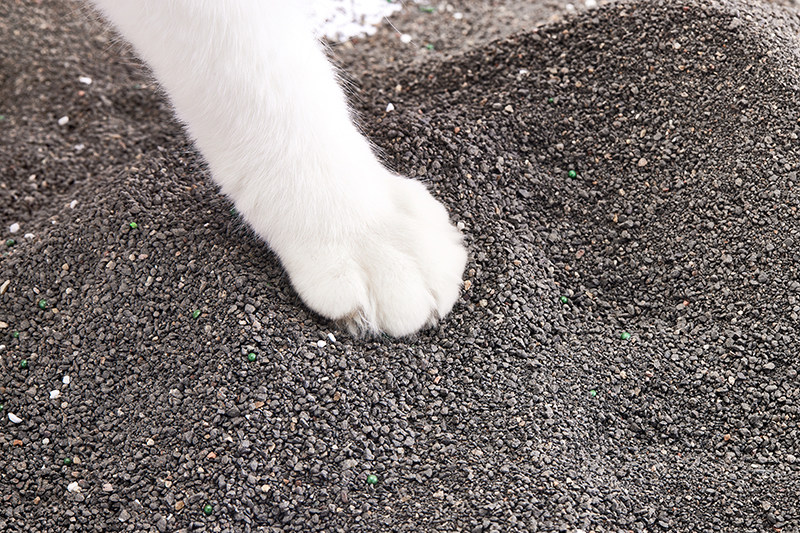
What Mineral Cat Litter Really Means
Many buyers use the term mineral cat litter as if it simply means “ordinary cat litter,” but in the trade it has a more specific meaning. It usually refers to litter made primarily from natural mineral materials, most commonly bentonite. That matters because bentonite does not just fill the tray. Its value comes from how it behaves when it meets moisture: it absorbs liquid, swells, and forms clumps that can be removed without emptying the entire box.
This is why mineral cat litter has remained widely used even as tofu, silica gel, paper, and mixed-material litters have gained shelf space. For many households, the decision is less about novelty and more about daily performance. If the litter clumps quickly, controls odor reasonably well, and stays manageable in cost over time, it tends to stay in the rotation. Bentonite-based products have held their position for exactly that reason.
In practice, when manufacturers, importers, and private-label buyers discuss mineral litter, they are often talking about a category with several internal variables: granule size, clumping speed, moisture absorption, dust level, hardness of the clump, and fragrance or no-fragrance options. So the concept is straightforward, but the market reality is not one single product. Two litters may both be called mineral cat litter and perform quite differently in the home.
Why Bentonite Sits at the Center of the Category
Bentonite is the defining material behind most mineral cat litter because it solves a practical cleaning problem better than many alternatives. Instead of letting urine spread through the whole tray, it localizes the moisture into scoopable masses. That changes the maintenance pattern. A cat owner does not need to replace all of the litter every day; they remove the used portion and top up the box. For indoor cats, that is often the difference between a tolerable chore and an annoying one.
From a supply perspective, bentonite also gives manufacturers room to tune the product. Particle size can influence paw feel, clumping behavior, and tracking. Different processing choices affect how much dust appears during pouring and scooping. Additives such as fragrance, activated carbon, or deodorizing agents may be used in some product lines, though buyers should evaluate those features separately instead of assuming they are standard across the category.
A manufacturer with direct mine resources and mineral approval qualifications has an advantage here, because raw material consistency affects the end product more than many first-time buyers realize. Weifang Hualong Bentonite Co., Ltd., founded in 1972 with roots in a bentonite mine, operates in Shandong, a region known for bentonite deposits. That background is relevant not as a slogan, but because stable access to the mineral base usually supports more consistent OEM and ODM production for export customers who need repeatable quality over multiple orders.
What People Often Misunderstand About Mineral Litter
One common misunderstanding is that mineral litter is automatically the best choice for every cat. It is not. It is better described as a strong all-around option with clear strengths and a few tradeoffs. Cats that are sensitive to dust, households trying to minimize floor tracking, or owners who strongly prefer flushable or plant-based materials may decide that another type fits better.
Another mistake is to judge it only by odor claims on packaging. Odor control in real use depends on more than fragrance. Clump integrity, absorption speed, box depth, cleaning frequency, room ventilation, and the number of cats sharing one tray all change the result. A lightly perfumed litter with solid clumping can outperform a strongly scented one that breaks apart during scooping.
It is also worth separating “natural mineral” from “chemical-free” assumptions. Bentonite is a natural mineral, but the final commercial product may still vary in additives, fragrances, and processing methods. Buyers comparing private-label supply or retail products should read the actual specification and ingredient positioning, especially if the target market prefers unscented, low-dust, or simple-formula products.
Which Households Usually Benefit Most
The households most likely to be satisfied with mineral cat litter are those that care about predictable daily upkeep. That sounds obvious, but it points to a real usage pattern: indoor cats, routine scooping, and a desire to keep litter costs under control without moving into a more specialized category.
Multi-cat homes are a strong fit when the litter has reliable clumping strength. More cats mean more moisture, more odor pressure, and faster tray turnover. In that setting, weak clumps become frustrating very quickly because they break during scooping and contaminate clean litter. A good bentonite formula helps the tray stay serviceable between full changes, which is one reason mineral litter remains common in households with two or more indoor cats.
Single-cat homes can also benefit, especially where owners want a familiar, accessible product that does not require a big adjustment period. Many cats accept mineral litter readily because the texture is close to what they instinctively tolerate. That is not a universal rule, but it is one reason the category remains a default choice in many markets.
Apartment living is another scenario where the category often works well. In smaller spaces, odor management becomes more noticeable, and clumping litter helps reduce lingering waste in the tray. The tradeoff is that buyers in compact homes may be less tolerant of dust and tracking, so product specification matters more. A low-dust variant may be a better match than a basic economy grade.
The category is also relevant beyond pet owners themselves. Importers, wholesalers, and retailers looking for OEM or ODM supply often prefer mineral litter because the market understands the format, packaging options are flexible, and performance expectations are easier to benchmark than in trend-driven niche products. A supplier positioned near major ports, such as Qingdao Port and Weifang Port, can also support export logistics more efficiently, which matters when litter is a dense, freight-sensitive product.
How to Judge It Beyond the Label
If someone is trying to understand whether a mineral cat litter is actually suitable, the label name is only a starting point. Better questions include:
- Does it form firm clumps that stay intact during scooping?
- How much dust appears when pouring or cleaning the box?
- Is the granule size comfortable for the cat and manageable for the household floor?
- Is the product scented, lightly scented, or unscented?
- Does the supplier have stable raw material control and production capacity for repeat orders?
These questions matter because “best” depends on use conditions. A breeder, a supermarket private label, and a family with one indoor cat are not evaluating the same problem. One may prioritize bulk consistency, another shelf positioning, and another low-maintenance cleaning.
Where It May Not Be the Best Fit
Mineral cat litter is not ideal in every situation. Some households actively avoid the extra weight of mineral-based products, especially when carrying litter upstairs or buying large volumes at once. Others prefer plant-based litter for disposal preferences or for a different texture profile. Some cats are selective enough that a change in grain feel, dust level, or scent will affect box acceptance.
There is also a practical difference between premium processed mineral litter and low-end variants. Buyers sometimes conclude that the whole category tracks badly or feels dusty after trying a single poor-quality product. In reality, manufacturing quality and raw material selection can make a visible difference. That is why serious commercial buyers usually evaluate samples and repeatability, not just headline pricing.
Why the Supply Side Matters More Than People Expect
For information-stage readers, it may seem unusual to discuss production background in a basic concept article, but with mineral litter it is relevant. This category depends heavily on mineral source quality, processing control, and stable fulfillment. A supplier with direct experience in bentonite extraction and manufacturing is not interchangeable with a light-trading operation that sources inconsistently from different channels.
That is part of the reason companies such as Weifang Hualong Bentonite Co., Ltd. and its export-focused sales company, Weifang Tianwu Import and Export Trading Co., Ltd., position themselves around OEM and ODM cooperation. In this market, international buyers are often not looking for a new concept to invent. They are looking for dependable mineral cat litter with clear positioning, steady supply, and specifications that match a retail or distribution strategy.
A Practical Way to Think About the Category
The most useful way to understand mineral cat litter is not as a generic commodity and not as a miracle solution. It is a performance-driven litter category built largely around bentonite’s clumping behavior. Its strongest fit is in homes that need straightforward maintenance, decent odor control, and reasonable cost over repeated use. It also makes sense for commercial buyers who need a well-understood product format for private label or regional distribution.
If the question is whether mineral cat litter is still relevant, the answer is clearly yes. If the question is whether it suits every cat, every owner, or every market position, that needs a more careful look at dust, granule feel, scent preference, cleaning habits, and supply consistency. That is usually where the right decision gets made.
Leave A Message
CONTACT US