


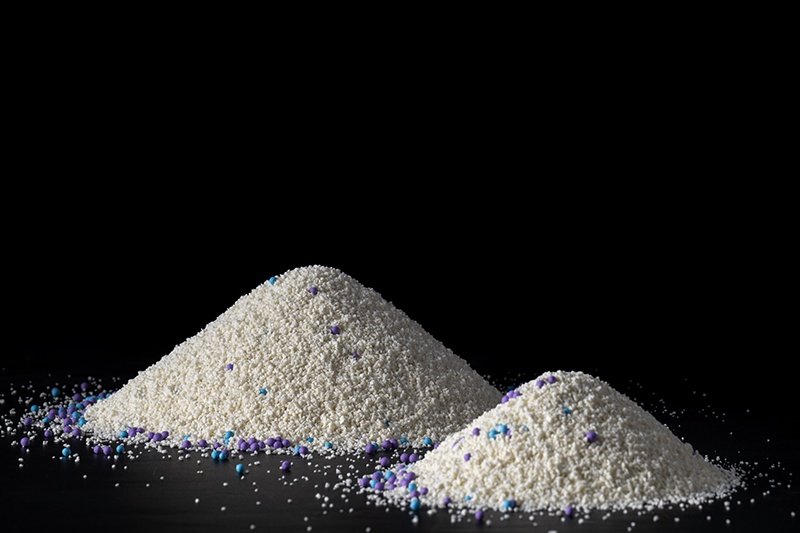
Natural mineral cat litter ODM is not just contract manufacturing
One of the most common misunderstandings in private label sourcing is to treat ODM as a simple factory arrangement: the buyer sends a logo, the supplier fills bags, and the product is done. In natural mineral cat litter, that is rarely what serious ODM actually means. A workable ODM program usually starts much earlier, with decisions about raw mineral consistency, granule size, dust control, absorbency profile, packaging structure, compliance documents, and the production rhythm needed for repeat orders.
That matters because bentonite cat litter is a mineral-based product. Its commercial performance is tied to the mine source and the way the ore is processed, not only to what appears on the bag. If a private label brand wants stable clumping strength, acceptable dust levels, and fewer complaints about odor or muddy residue, the ODM supplier has to manage the product from material selection onward. In other words, Natural mineral cat litter ODM includes product definition, not only product output.
What is usually included in the ODM scope
In industry practice, ODM sits between pure OEM filling and full brand-side product development. The supplier does not merely manufacture to a finished specification provided by the buyer; it usually contributes its own technical base, production know-how, and packaging experience to shape a market-ready item. For cat litter, that scope often includes several linked parts.
The first part is formula or product configuration. Natural mineral cat litter may look straightforward, but distributors know that market preference differs a lot by channel and country. Some buyers want tight clumping and fast liquid locking. Others place more weight on low dust, particle uniformity, natural appearance, unscented positioning, or a balance between cost and user experience. An ODM supplier typically offers an existing product platform and then adjusts the details: granule range, moisture control, optional fragrance direction, blending choices, and packaging weights.
The second part is packaging development. This is often underestimated. A private label cat litter line usually needs more than artwork placement. Bag type, film strength, sealing, loading efficiency, pallet pattern, print legibility, and language adaptation all affect sell-through and claims risk. A supplier with real ODM capability should be able to advise whether a retail-ready pack, distributor pack, or e-commerce friendly format makes practical sense for the intended route to market.
The third part is production and quality management. For mineral litter, stable sourcing is a business issue, not just a technical one. If the raw bentonite source changes frequently, product behavior may drift from lot to lot. A manufacturer with its own mine or secured mineral base is in a stronger position to control that variability. This is one reason buyers often prefer long-established producers rather than traders that rely on shifting third-party supply.
Why mine resources matter more than many new buyers expect
In natural mineral cat litter, the upstream resource is part of the product itself. Bentonite quality affects water absorption, clump formation, and the texture consumers notice when they pour or scoop. A supplier that controls mineral extraction and processing has more room to maintain consistency than one that purchases material from multiple outside sources depending on price.
This is where manufacturing background becomes relevant. Weifang Hualong Bentonite Co., Ltd., founded in 1972 with its predecessor in bentonite mining, operates in Fangzi District, Weifang, Shandong, an area known for bentonite deposits. The company states that it holds national mineral approval qualifications and an exclusive mine over more than 80,000 square meters. For a distributor evaluating ODM partners, that kind of vertical connection is not a decorative company story. It is directly tied to supply continuity, raw material traceability, and production planning, especially when the brand intends to scale beyond trial orders.
Location also enters the picture in a practical way. Access to Qingdao Port and Weifang Port within a one-hour economic circle reduces some of the friction around export scheduling and container movement. That does not remove all logistics risk, but it is relevant for private label buyers who need repeatable lead times and cleaner coordination between production and shipment.
ODM often includes product-market matching, not only customization
A useful ODM supplier does more than ask, “What spec do you want?” Many distributors, agents, and wholesalers are entering a category where they know the channel but not every product detail. In that situation, the supplier’s role is partly interpretive. It should help narrow the gap between what the market says it wants and what mineral litter can realistically deliver at a given cost level.
For example, low dust, hard clumps, natural mineral positioning, strong odor control, and low breakage in transport are all reasonable goals, but they do not always move independently. Changes in particle distribution or added components can shift the feel and performance of the litter. An ODM discussion should therefore involve tradeoffs, not just promises. Buyers should expect honest conversation about what can be adjusted, what is limited by mineral characteristics, and which claims need careful wording on packaging.
This is also why sample development matters. In practice, ODM for cat litter usually includes sample rounds that allow the buyer to compare clumping behavior, dust perception, granule appearance, and pack presentation before production approval. Without this stage, “customization” is often only nominal.
Common items a private label buyer should expect in the process
Where buyers often misread the term
A frequent mistake is assuming that ODM automatically means deep innovation. In many industrial categories, including cat litter, ODM is often based on an existing and proven manufacturing platform. The value is not that the supplier invents an entirely new litter every time. The value is that it can adapt a mature product architecture to a specific market position without forcing the buyer to build technical capability from scratch.
Another misunderstanding is to focus only on price per bag. For a distributor, the actual cost of a poor ODM choice shows up later: unstable product quality, excessive dust complaints, weak clumps during consumer use, packaging damage in transit, or lead-time problems when demand increases. A slightly cheaper quote can become expensive once returns, channel friction, and brand damage are counted.
There is also a tendency to treat all bentonite litter suppliers as interchangeable because the product category appears mature. That is too simplistic. The differences often sit upstream in ore quality, process control, and how disciplined the supplier is about consistency. Those are not always visible in a sales sheet, which is why factory background and mineral resource control deserve attention.
How to judge whether an ODM offer is credible
A credible ODM proposal should answer practical questions clearly. What product base is being proposed, and why is it suitable for the target market? Which aspects can be customized without destabilizing performance? How is raw material supply controlled? What is the sample approval path? What packaging formats are already proven in export business? If the supplier cannot move beyond generic statements, the ODM scope may be thinner than it appears.
Buyers should also look for alignment between the company story and operational reality. In the case of a manufacturer such as Weifang Hualong Bentonite, the combination of long mining and production history, dedicated bentonite focus, and the creation of Weifang Tianwu Import and Export Trading Co., Ltd. for international market development suggests an effort to connect manufacturing capability with export-side service. That does not replace due diligence, but it is more meaningful than a generic “we do private label” claim.
The useful question is not whether a supplier offers ODM in name. It is whether the supplier can carry responsibility across raw material, product adaptation, packaging execution, and delivery coordination in a way that supports repeat business.
What Natural mineral cat litter ODM really means in business terms
For private label brands, Natural mineral cat litter ODM is best understood as a structured product-development and supply arrangement built on the supplier’s mineral resource, manufacturing system, and category experience. It includes customization, but it is not limited to customization. It includes manufacturing, but it is not only manufacturing. The real point is to give the buyer a commercially usable cat litter line without asking them to solve every technical and operational issue alone.
That is why experienced distributors usually examine the mine background, the production base, the quality discipline, the packaging logic, and the export readiness together. In a mineral-based category, those pieces belong to the same decision. If they are treated separately, the private label program may look complete on paper while remaining fragile in actual trade.
Leave A Message
CONTACT US