


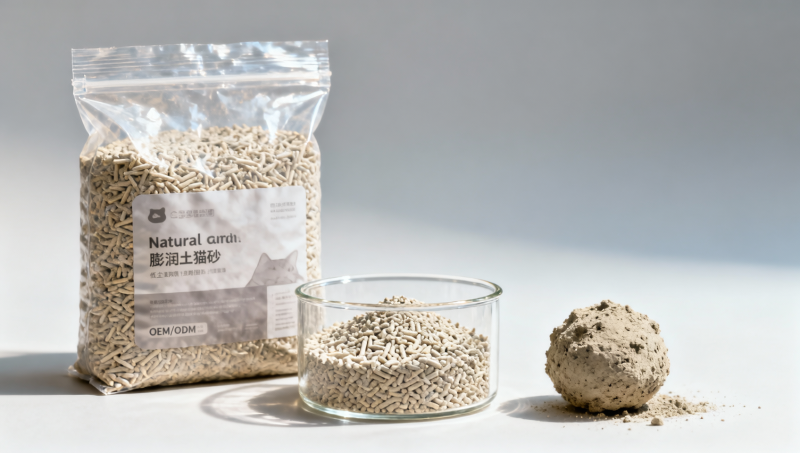
Choosing between private label and a custom formula for Natural mineral cat litter ODM can shape your brand’s cost, quality, and market positioning. For buyers comparing Bentonite clay cat litter OEM service or planning a Natural bentonite cat litter bulk purchase, understanding raw material control, production capability, and export experience is essential. This guide helps you evaluate the best ODM path for your business goals.
How should buyers compare private label and custom formula for natural mineral cat litter ODM?
In the pet supplies industry, the choice between private label and custom formula is not only about packaging. It affects product consistency, dust performance, clumping speed, cost structure, and market differentiation. For distributors, importers, retailers, and brand owners, this decision usually comes down to 3 core questions: how fast you need to launch, how much control you want over the formula, and what level of price competition you expect in your target market.
Private label natural mineral cat litter ODM is often suitable when a buyer wants a proven bentonite clay cat litter formula with customized bag design, logo, and pack size. This route is usually more efficient for projects with shorter timelines, such as 2–4 weeks for sample confirmation and routine production planning after artwork approval, depending on order size and packaging complexity. It helps reduce formulation risk while allowing a branded market entry.
A custom formula is more suitable when the buyer needs a specific balance of absorbency, granule size, fragrance option, clumping behavior, bulk density, or low-dust performance. This is common for premium private brands, regional distributors with defined user feedback, and procurement teams serving chain stores or e-commerce platforms that need product differentiation. In practice, custom development may require 2–3 sample rounds before mass production is approved.
Weifang Hualong Bentonite Co., Ltd. brings an important advantage to this decision: it is a manufacturer with roots going back to 1972, developed from a bentonite mine, with an exclusive mine and complete national mineral approval qualifications. For buyers of natural bentonite cat litter bulk purchase programs, upstream raw material access matters because it supports more stable quality control and clearer communication between formula goals and production execution.
What is the practical difference in business terms?
From a commercial perspective, private label usually lowers development cost and speeds up market entry. It fits buyers who need standard bentonite mineral cat litter products under their own brand, often with decisions focused on pack sizes such as 5L, 10L, or 20L, basic fragrance options, and container loading efficiency. This model is especially useful when finance teams need predictable cost control and when sales departments want fast SKU expansion.
Custom formula projects require deeper alignment between technical evaluation, quality control, and purchasing. Teams may need to define 4–6 key indicators before final approval, such as moisture range, clump strength, dust tendency, deodorizing preference, granule distribution, and bag durability. That added work can create stronger market positioning, especially for brands targeting premium consumers or trying to replace an existing supplier with more reliable mine-source control.
Quick decision signals
- Choose private label if your launch window is tight, your market already accepts standard clumping litter, and your priority is packaging identity rather than formula novelty.
- Choose custom formula if you are building a premium line, solving recurring complaints about dust or odor, or targeting a region with specific user preferences.
- Use a phased approach if you want both speed and differentiation: start with a mature OEM or ODM base product, then optimize formula details after first-market feedback in 1–2 quarters.
Which option fits your purchasing stage, budget, and market positioning?
Different buyer roles often evaluate natural mineral cat litter ODM through different lenses. Technical teams focus on product behavior in use. Procurement teams focus on unit cost, order flexibility, and logistics. Business decision-makers look at brand differentiation and margin. A useful way to compare the two models is to map them against launch speed, minimum development effort, formulation freedom, and long-term brand value.
For many B2B buyers, private label is the lower-risk route when entering a new country, testing a distributor channel, or running a first container trial. A custom formula is usually justified when expected reorder frequency is stable, the annual volume outlook is clearer, or the customer base already gives repeated feedback that standard offerings are not enough. This is why procurement plans often move in 2 stages: validation first, differentiation second.
The following comparison table helps clarify where each approach creates value in a bentonite clay cat litter OEM service or ODM project. It is especially relevant for importers, supermarket suppliers, pet retail chains, and private brand operators comparing short-term operating pressure with long-term brand control.
The table shows a common pattern: private label helps compress time and simplify launch management, while a custom formula supports stronger product identity. For many cat litter importers, the right decision is not ideological. It depends on how many SKUs are planned, whether the market is price-driven or premium-driven, and whether you need a ready-to-sell product or a protected formula direction.
Who typically chooses each route?
Private label is often preferred by wholesalers, new market entrants, and channel traders who need commercial flexibility. They may be balancing container utilization, freight timing, and retail negotiation windows. When the key target is to place products quickly into pet stores, supermarkets, or online shops, standard bentonite mineral cat litter under a private brand is a practical choice.
Custom formula is often selected by mature brands, regional leaders, and buyers with measurable user feedback. If existing customers complain about dust during pouring, slower clumping after use, or inconsistent granule texture from one batch to another, custom development becomes a business tool rather than a technical luxury. In these cases, the ODM supplier must understand both mineral processing and final market expectations.
Because Weifang Hualong has its own mine and long manufacturing history, it can support conversations that start from raw bentonite characteristics rather than only from packaging requirements. That matters when technical evaluators and quality teams need better traceability between raw mineral selection and finished cat litter behavior.
What technical and quality points matter most in bentonite clay cat litter OEM service?
For natural bentonite cat litter bulk purchase projects, formula selection should not stop at appearance. In practical use, buyers usually evaluate at least 5 technical areas: clumping response, dust level during pouring, odor-control tendency, granule consistency, and packing stability during transport. These indicators influence user satisfaction, warehouse handling, and complaint rates after retail launch.
Clumping litter performance is especially important because it shapes everyday use. End users want fast agglomeration for easier scooping, while distributors and brands want fewer break-apart complaints. Dust control matters for both pet owners and commercial reputation. A low-dust target does not mean no dust in absolute terms; it means managing mineral processing, screening, and handling so the final product performs within an acceptable commercial range.
Granule size is another purchasing decision point. Finer grades may support faster clumping and stronger coverage, but they can also increase sensitivity to dust perception if not properly processed. Coarser grades may improve flow and reduce fine particles in some applications, but user preference varies by market. This is why sample evaluation should include at least 3 checks: pouring observation, clump pickup condition, and post-use residue review.
The manufacturer’s upstream control is central here. A company that started as a bentonite mine and operates with an exclusive mine has a practical advantage in maintaining raw material continuity. For project managers and quality personnel, that supports more stable planning across repeated orders and can reduce the mismatch between approved sample and bulk shipment performance.
Key technical checkpoints before bulk ordering
Before confirming a bentonite clay cat litter OEM service order, it helps to align on a technical checklist rather than discussing only price. The table below outlines common evaluation dimensions used in ODM communication, quality review, and purchasing approval for natural mineral cat litter projects.
These checkpoints help cross-functional teams speak the same language. Procurement can compare supplier offers more effectively, quality teams can define incoming inspection priorities, and business managers can connect technical performance to consumer feedback. For cat litter ODM, technical clarity at the sample stage is often more valuable than negotiating a lower price without defined acceptance criteria.
A practical 4-step approval sequence
- Confirm target market and product position, such as economy, standard, or premium bentonite mineral cat litter.
- Approve sample based on 3–5 practical use observations instead of packaging appearance alone.
- Align packaging details, shipping marks, and loading plan before mass production starts.
- Set batch inspection points for incoming goods, including appearance, bag condition, and consistency with approved sample.
How do cost, lead time, and supply chain control affect the final ODM decision?
For finance approvers and purchasing teams, the private label versus custom formula decision must be tied to total project economics. The product cost itself is only one part. You also need to consider sample development time, packaging change frequency, artwork revision workload, container planning, warehouse turnover, and the cost of consumer complaints if product performance does not match market expectations.
Private label usually produces a simpler cost structure. Because the formula is already established, fewer adjustments are needed and internal approval cycles are shorter. This often helps when buyers need a straightforward quotation process, a faster first shipment window, or easier inventory forecasting for the next 1–2 quarters. It is also suitable for distributor models where multiple brands share a common product base but use different market positioning.
Custom formula may increase early-stage development work, but it can protect gross margin when your product competes on user experience instead of price alone. In pet supplies, small performance differences can affect repeat purchase rates. If your customers are sensitive to dust, fragrance intensity, or clump firmness, a formula tailored to those expectations may reduce returns and protect channel relationships.
Supply chain reliability also matters. Weifang Hualong is located in a bentonite-rich area of Shandong and within the one-hour economic circle of Qingdao Port and Weifang Port. For export business, this helps connect production planning with outbound logistics more efficiently. Buyers evaluating bulk natural bentonite cat litter orders often see value in a manufacturer that combines mine access, production specialization, and export-oriented sales coordination.
Cost and operational trade-offs to review
The matrix below is useful when finance teams, business managers, and procurement staff need to evaluate not just product price but total operating impact. It can also support internal approval meetings when different departments have different priorities.
A common mistake is to compare only quoted unit price. In reality, time-to-market, rework risk, complaint handling, and packaging failure costs can have a larger effect on the project outcome. When a supplier can coordinate raw material control, manufacturing, and export support, buyers gain more visibility over the total order process, not just the ex-factory figure.
Three common risk points
- Approving samples without defining acceptance points for clumping, dust perception, and packaging condition.
- Choosing a custom formula too early when market demand is still untested and reorder volume is uncertain.
- Assuming all bentonite cat litter suppliers have the same mine-source stability and export coordination capability.
What should importers, distributors, and brand owners ask before placing an order?
A strong purchasing process for natural mineral cat litter ODM should involve more than basic product inquiry. It should cover sample logic, packaging details, shipping preparation, and quality communication. Whether you are an information researcher, a purchasing officer, a quality manager, or a business decision-maker, the same principle applies: the clearer the project definition in the first 7–10 days, the smoother the order execution will be.
For importers and distributors, the first question is often whether a standard private label program can already meet market demand. If yes, launch speed may be more valuable than customization. For premium brand owners, the question is different: can the supplier translate user feedback into a practical formula direction while keeping production consistent over repeated orders? That requires experience in both bentonite processing and export-facing ODM communication.
Buyers should also review service process clarity. A reliable supplier should be able to explain sample handling, artwork confirmation, packaging review, production scheduling, and shipment coordination in clear steps. This reduces internal friction for project managers and makes approval easier for finance and senior management.
The combination of manufacturing history since 1972, exclusive mine resources, over 80,000 square meters of operating area, and dedicated international sales through Weifang Tianwu Import and Export Trading Co., Ltd. gives buyers a practical basis for discussing both product and export execution in one place. That is especially useful when order decisions involve technical, commercial, and logistics teams at the same time.
Procurement checklist for bentonite mineral cat litter projects
- Confirm whether you need a ready private label product or a custom formula based on 3 priorities: speed, price target, and product differentiation.
- Request samples that match your intended pack size and market level, not only a general showroom sample.
- Define 4 practical acceptance points before order approval, such as granule appearance, clumping condition, dust observation, and bag sealing quality.
- Clarify routine lead time, sample revision cycle, and packaging confirmation sequence so internal teams can plan launch and cash flow.
- Ask how raw material continuity is managed, especially if your project requires stable repeat ordering across several months or seasons.
FAQ for common ODM purchasing concerns
Is private label always cheaper than a custom formula?
Not always in total business terms, but it is usually simpler at the beginning. Private label often reduces early development work and speeds up approval. A custom formula may cost more in time and coordination during the first stage, yet it can support stronger market positioning and potentially better repeat-order quality if your target customers have specific performance expectations.
How many sample rounds are normally needed for custom bentonite cat litter ODM?
A practical range is often 2–3 rounds, depending on how specific your technical targets are. If you only need minor adjustments, one revision may be enough. If you are balancing dust behavior, granule feel, odor preference, and clump strength together, more structured review may be needed before production approval.
What matters most for quality control in natural bentonite cat litter bulk purchase?
The most useful quality focus points are consistency with approved samples, packaging integrity, and practical use performance. Buyers should not rely on one indicator alone. A balanced review usually includes granule appearance, handling dust observation, clump condition after testing, and bag performance during transport preparation.
When should a distributor move from private label to custom formula?
Usually when reorder frequency becomes stable, user feedback becomes specific, and the business needs stronger differentiation. Many distributors start with private label to validate the market in one or two selling cycles, then move to a custom formula when they understand which product improvements can create better margin or stronger channel loyalty.
Why work with a mine-based manufacturer for your natural bentonite cat litter program?
In natural mineral cat litter ODM, the real advantage often starts before the production line. It begins at the raw material source. A manufacturer with mining background and dedicated bentonite experience can communicate more clearly about material selection, processing logic, and consistency control. That is valuable for technical assessors, purchasing managers, and brand owners who need more than a trading response.
Weifang Hualong Bentonite Co., Ltd. offers a combination that many buyers look for in one supplier: specialization in bentonite mineral cat litter products, manufacturing history since 1972, an exclusive mine, complete national mineral approval qualifications, and an operating area of more than 80,000 square meters. For export business, the additional setup of Weifang Tianwu Import and Export Trading Co., Ltd. supports international market communication focused on bentonite mineral cat litter sales.
Location also supports execution. Being within the one-hour economic circle of Qingdao Port and Weifang Port helps connect production scheduling to shipping arrangements. For overseas buyers, this can improve order coordination, especially when balancing container bookings, delivery windows, and seasonal demand. In practical procurement terms, logistics accessibility is not a side issue; it directly affects reliability.
If you are comparing private label versus custom formula for natural mineral cat litter ODM, the next step should be concrete. Share your target market, preferred pack size, expected annual volume, and whether your priority is fast launch or formula differentiation. You can also ask for support on sample evaluation, product selection, delivery timing, packaging discussion, export coordination, and quotation planning.
Why choose us
- We support both OEM and ODM paths, so buyers can start with a standard private label product or move toward a tailored formula based on real market needs.
- Our mine-based background helps align raw material control with finished bentonite cat litter performance, which is important for stable repeat orders.
- Our manufacturing and export coordination can help buyers discuss sample support, packaging options, production timelines, and shipment planning in one process.
- We can communicate around practical project questions, including parameter confirmation, product positioning, custom solution direction, sample request, and quotation details.
If your team is evaluating Bentonite clay cat litter OEM service or planning a Natural bentonite cat litter bulk purchase, contact us with your required specification range, application market, and packaging idea. We can help you compare private label and custom formula options, confirm suitable product direction, review sample requirements, discuss lead time expectations, and prepare a quotation based on your actual business scenario.
Leave A Message
CONTACT US