


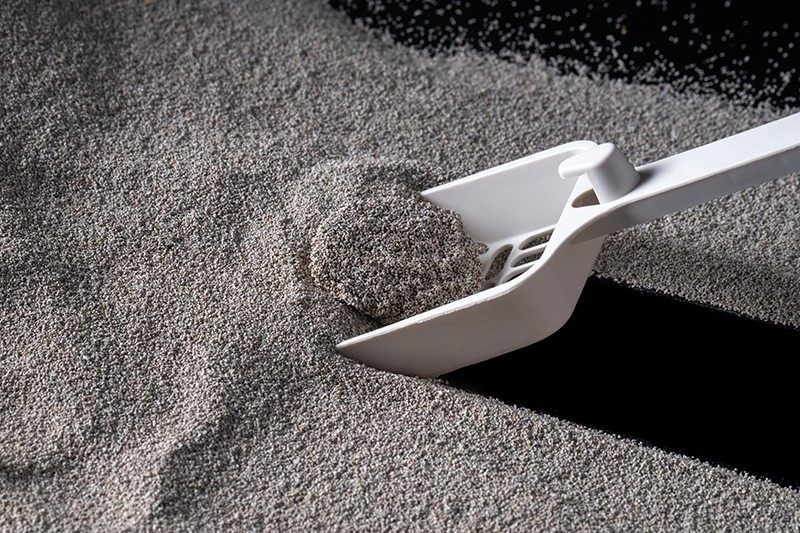
For cat owners who sneeze, wheeze, or worry about airborne litter dust, choosing the right product can make daily care much easier. This article explores whether low dust cat litter for allergic owners truly reduces irritation, how fast clumping cat litter odor control improves cleanliness, and why dust free cat litter for kittens may also create a safer, more comfortable home for both cats and people.
In retail and private-label pet products, litter performance is rarely judged by one feature alone. Buyers, distributors, and brand owners usually compare dust level, clumping speed, odor management, raw material consistency, packaging flexibility, and supply reliability before selecting a bentonite litter partner.
For allergy-sensitive households, the dust issue is practical rather than cosmetic. Fine particles released during pouring, digging, and cleaning can settle on floors, remain in the air for several minutes, and increase discomfort in small apartments, multi-cat homes, and poorly ventilated rooms.
This is why many importers and pet brands are prioritizing low dust formulas with fast clumping and stronger odor control. When these three factors work together, the litter box becomes easier to maintain, the room smells fresher, and airborne residue is reduced during daily use.
Why Low-Dust Cat Litter Matters for Allergy-Sensitive Homes
Low dust cat litter for allergic owners can help, but it is important to define what “help” really means. It does not remove all allergy triggers, because many reactions come from dander, saliva proteins, or poor litter box hygiene. However, reducing loose mineral dust can lower one common source of irritation.
In practical use, dust generation usually happens in 3 main moments: when the litter is poured into the tray, when cats dig and cover waste, and when owners scoop clumps. A better low-dust formula aims to reduce visible airborne particles at each of these stages.
What causes litter dust in the first place?
Dust often comes from excessive fines produced during mining, crushing, screening, drying, transport, or repeated friction inside the bag. If particle size distribution is uneven, more powder is created. If moisture is unstable, pellets or granules may become brittle and break during logistics.
For bentonite cat litter, raw ore quality matters from the beginning. A stable deposit, controlled processing flow, and proper screening can reduce powder content before packing. For B2B buyers, this is one reason upstream mineral control is often more important than only comparing bag design or label claims.
Common irritation scenarios
- Small indoor spaces under 20 square meters with limited ventilation
- 1–3 cat households where litter boxes are scooped 2 or more times daily
- Homes with children, seniors, or allergy-sensitive adults
- Kittens that dig aggressively and scatter fine particles around the tray
The table below outlines how standard litter and low-dust bentonite litter differ in everyday use. These are practical comparison points often used by importers, distributors, and OEM buyers when evaluating a new product line.
The key takeaway is simple: low dust cat litter for allergic owners is not a medical solution, but it can be a meaningful environmental improvement. For product buyers, that makes low-dust performance a sellable feature with clear household value rather than just a marketing phrase.
How Fast Clumping Supports Cleaner Boxes and Better Odor Control
Fast clumping cat litter odor control is closely connected to dust reduction. When liquid waste forms a firm clump within a short time, usually within a few seconds to a few minutes depending on granule size and moisture absorption, less wet litter is left to break apart during scooping.
A stronger clump also helps isolate odor at the source. Instead of allowing urine to spread across the bottom of the tray, the litter forms a compact mass that can be removed in 1 scoop. This reduces ammonia buildup and lowers the need for full-box replacement too frequently.
Why odor control matters in allergy-focused products
Consumers shopping for low-dust litter often care about indoor air quality in a broader sense. Dust is one issue, but odor concentration is another. If litter controls dust but fails to manage smell, owners may compensate with sprays, deep cleaning, or more frequent litter changes, raising overall maintenance costs.
For this reason, many successful products combine 2 functions: reduced fines and reliable clumping. In B2B sourcing, importers often ask whether the litter can maintain clump firmness after repeated use over 5–7 days in single-cat conditions or 2–3 days in higher-traffic boxes.
Operational benefits for private-label brands
- Clearer product positioning for premium or mid-premium pet care channels
- Higher repeat purchase potential because cleaning results are visible
- Lower complaint risk related to muddy clumps, tray sticking, or fast odor spread
- Stronger appeal in urban apartments where one litter box may serve daily for 24 hours
The next table summarizes the main evaluation points buyers can use when selecting a fast clumping cat litter odor control product for import, distribution, or OEM branding.
For buyers, the most competitive products are usually those that perform consistently across all 4 factors rather than excelling in only one. A fast clumping cat litter odor control formula with stable dust behavior often delivers the strongest long-term market fit.
Is Dust Free Cat Litter for Kittens a Better Choice?
Dust free cat litter for kittens is often preferred because young cats are still adapting to the litter box and may dig, sniff, or step through litter more actively than adults. In the first weeks or months, a cleaner formula can create a more comfortable introduction to box training.
Although “dust free” is commonly used in product language, buyers should treat it as a performance goal rather than an absolute claim. In real production and transport conditions, very low dust is more realistic than complete zero dust. Careful communication on packaging helps avoid customer misunderstanding.
What kitten-focused buyers usually look for
- Gentler dust behavior during pouring and scratching
- Granule size that balances paw comfort and clumping efficiency
- Reliable odor control for indoor starter spaces
- Low mess around the tray, especially in homes with 1 kitten and limited floor area
Kittens also raise a merchandising opportunity for pet brands. Packaging built around “first litter box,” “indoor comfort,” or “easy daily cleanup” can speak to new cat owners. In this segment, dust free cat litter for kittens often overlaps with the same concerns seen in allergy-sensitive households.
Three selection points for safer positioning
First, check granule consistency. A more uniform size helps reduce powder and improves clump predictability. Second, review bag sealing and transport strength, since broken bags can increase fines before the product reaches retail. Third, test daily performance over at least 3 use cycles rather than one single pour test.
These checks are especially useful for OEM and ODM projects, where the same formula may be packed into 5 kg, 10 kg, or other retail formats for different markets. Product handling behavior can change depending on bag size, pallet movement, and shipping duration.
What B2B Buyers Should Ask a Bentonite Cat Litter Manufacturer
When sourcing from a manufacturer, product claims should be supported by production logic. For bentonite litter, buyers should ask about mine resources, processing capability, quality consistency, export readiness, and customization options. These factors shape both product performance and supply stability.
Weifang Hualong Bentonite Co., Ltd. is located in Jiulong Industrial Park, Fangzi District, Weifang City, Shandong Province, China, an area known for bentonite deposits. Founded in 1972, with its predecessor as a bentonite mine, the company focuses on bentonite mineral cat litter products and operates its own mine over 80,000 square meters.
For international market expansion, the company has also established Weifang Tianwu Import and Export Trading Co., Ltd. to specialize in cat litter sales. For B2B customers, this structure can support OEM and ODM cooperation while improving communication for export-oriented orders.
Key sourcing questions to ask before placing orders
- Can the supplier maintain stable dust and clumping performance across repeated batches?
- What packaging options are available for private label, including bag design and carton format?
- What is the usual production and delivery cycle, such as 2–4 weeks depending on order volume?
- Can the supplier support sample testing before full container confirmation?
- How are raw material sourcing and screening controlled to reduce excessive fines?
The following table gives a practical B2B review framework for comparing suppliers in the bentonite mineral cat litter category.
For importers and pet brands, the most useful supplier is not only a factory that can produce bags, but a partner that understands how low dust cat litter for allergic owners, fast clumping cat litter odor control, and dust free cat litter for kittens fit into real market positioning.
Practical Buying Advice for Importers, Distributors, and Private-Label Brands
If your target market includes urban households, premium pet stores, e-commerce buyers, or first-time cat owners, litter claims should be built around visible outcomes. Cleaner air around the tray, firmer clumps after use, and easier odor management are easier to communicate than technical descriptions alone.
A useful buying strategy is to test 2–3 formulas side by side under the same conditions. Compare pouring dust, clump shape after liquid contact, scoop breakage, odor after 24 hours, and residue left at the bottom of the tray. This method gives a more realistic product assessment than catalog review only.
Recommended evaluation checklist
- Check dust behavior during first pour and after 7 days of handling
- Compare clump firmness using the same scoop method across all samples
- Review odor control under single-cat and multi-cat usage assumptions
- Confirm packaging suitability for local retail, warehouse, and shipping needs
- Discuss OEM or ODM requirements before finalizing artwork and production plans
Low-dust products are especially valuable when paired with clear end-user education. Packaging can advise owners to pour gently, keep litter depth at an appropriate level such as 5–8 cm, scoop daily, and refill gradually rather than dumping the full bag at once. These small instructions improve actual user experience.
For brands entering competitive markets, this combination of product performance and practical guidance can reduce complaints while improving repeat sales. It is one reason why well-positioned bentonite litter remains strong in both traditional retail and online channels.
Conclusion: Does Low-Dust Litter Really Help?
Yes, low-dust litter can genuinely help allergic or dust-sensitive cat owners by reducing one important source of airborne irritation around the litter box. Its value becomes even stronger when combined with fast clumping cat litter odor control and thoughtful product design for kittens and indoor households.
For B2B buyers, the opportunity lies in selecting a manufacturer that can support stable raw materials, practical product customization, and export-ready cooperation. With long-term experience in bentonite mineral cat litter, its own mine resources, and OEM/ODM support, Weifang Hualong Bentonite Co., Ltd. and Weifang Tianwu Import and Export Trading Co., Ltd. offer a strong foundation for tailored cat litter supply.
If you are looking for low dust cat litter for allergic owners, fast clumping cat litter odor control, or dust free cat litter for kittens for your brand or distribution channel, contact us now to discuss samples, packaging options, and a customized supply solution.
Leave A Message
CONTACT US