


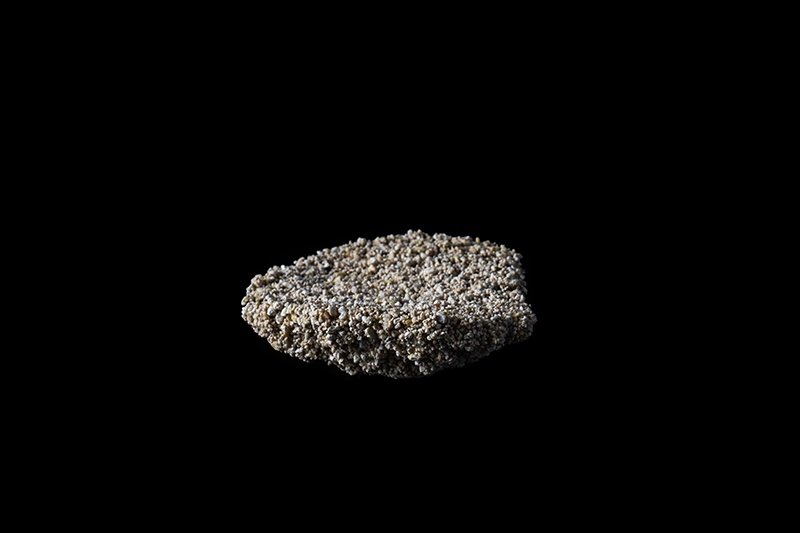
Start with deposit control, not the sales sheet
When you handle bentonite mineral cat litter wholesale from a quality or safety position, the first mistake is treating it like a simple packaged goods purchase. It is a mineral product first. That changes the risk profile. Before you compare price, fragrance, bag design, or even particle size, look at where the bentonite comes from and how stable that source is.
A supplier with its own mine and formal mineral approval background is usually easier to evaluate than one that is only trading mixed sources. The reason is practical: raw material consistency drives everything downstream, including clumping behavior, dust level, moisture variation, color drift, and batch-to-batch complaints. If the deposit changes often, your finished product will change with it.
For teams screening suppliers, ask for a clear explanation of the supply chain structure. Is the company mining, processing, packing, and exporting by itself, or combining materials from different origins? In bentonite mineral cat litter wholesale, this is not a small detail. It tells you whether future quality problems can be traced and corrected quickly.
Check the raw material story before you review finished samples
A polished sample can hide a weak raw material base. Start upstream.
- Ask whether the bentonite comes from one mine or multiple sources.
- Check whether the supplier can identify the mine, processing plant, and production lot tied to your sample.
- Review whether the same source will be used for mass production, not just for the qualification sample.
- Confirm whether OEM or ODM orders use the same raw material grade as the supplier’s standard products.
A common problem in wholesale buying is approving one good-looking sample and later receiving production made from a different raw material blend. The sample passes. The shipment disappoints. This is why your first approval should connect sample identity to source identity.
Dust control needs a real inspection method
Dust is one of the fastest ways to create consumer complaints, retailer pushback, and internal safety questions. Yet buyers still accept broad claims like “low dust” without asking how that conclusion was reached.
For wholesale evaluation, do not stop at visual appearance in a sealed pouch. Open the sample and handle it under repeatable conditions. Pour from a fixed height into a clean tray. Agitate it lightly. Compare more than one batch if possible. What matters is not whether a supplier says the dust is low, but whether the dust remains acceptably controlled across runs.
Pay attention to two separate issues:
- Visible airborne dust during pouring: this affects user perception immediately.
- Fine residue left in the bottom of the bag: this often increases complaint rates during the last third of use.
If you are comparing suppliers, ask them to define the test condition they use internally. If they cannot describe their own dust control check in plain terms, that usually tells you enough about process discipline.
Clumping performance should be judged like a use-case, not a lab slogan
Strong clumping is the core buying reason for bentonite cat litter, but teams often evaluate it too quickly. A clump that forms fast but breaks during scooping is not a good clump. A clump that becomes rock hard but sticks badly to the tray can create a different complaint. The point is to test the working balance.
During supplier assessment, look at:
- How quickly liquid is absorbed into the particle bed.
- Whether the clump holds shape after a short set time.
- Whether the clump breaks under normal scooping pressure.
- How much clean litter is wasted when the clump is removed.
Do this more than once. Fine granule products, mixed granule formats, and scented versions may behave differently even within the same supplier range. If your market is sensitive to cleaning convenience, poor clump integrity will hurt faster than a small price difference ever will.
Moisture is not just a storage issue
Moisture variation affects shipping weight, bag feel, dust suppression, clumping, and shelf stability. It also creates arguments later, because the same product can feel acceptable in one season and problematic in another.
What you need from a supplier is not a vague claim of “controlled moisture,” but evidence that the production line manages drying and packing consistently. Ask how moisture is checked during production, whether the same control point is used for every batch, and how product is protected before loading. If bags sit too long in humid conditions after processing, your approved sample and your delivered goods may not behave the same way.
This becomes even more important for export cargo. Long transit, port handling, and seasonal container conditions can all magnify weak moisture control.
Screen particle size for market fit, not personal preference
Different granule sizes change tracking, clumping speed, dust behavior, and consumer feel. There is no universal “best” size. There is only a fit between product design and target market.
For quality control teams, the useful check is consistency of particle distribution. If the sample contains too many fines, dust risk goes up. If the distribution is too coarse or uneven, clumping can become less uniform and customer perception may drop. When comparing suppliers for bentonite mineral cat litter wholesale, ask whether grading is controlled during production and whether the same size mix is maintained from batch to batch.
This is also where OEM discussions can go wrong. Buyers specify a visual style or a target price, and nobody checks whether the requested granule profile still supports the intended performance. It is better to settle the performance target first, then align the particle specification.
Do not separate odor control from formula decisions
Unscented and scented bentonite litter carry different risks. Unscented products depend more heavily on the base mineral and clumping cleanliness. Scented products add another layer: fragrance uniformity, compatibility with the carrier, and the possibility that perfume masks rather than solves an underlying odor issue.
If fragrance is part of the order, review how it is added and whether scent distribution stays even across the batch. Strong fragrance at the top of the bag and weak fragrance at the bottom is a classic process problem. You should also check whether the added scent changes dust perception or clump behavior. Sometimes it does.
Packaging review is part of product quality review
In export business, packaging failure is often treated as a logistics problem. It is not. Torn bags, weak seals, unclear labels, and unstable pallet packing all become product complaints once the goods arrive.
Check the bag specification, sealing condition, print clarity, and load resistance under handling. For OEM orders, approve the packaging file and the physical packaging sample separately. A correct artwork file does not guarantee a good bag. Also verify whether the outer packing and pallet arrangement match the container route you plan to use.
Make compliance a document check, not a verbal promise
Safety and compliance managers already know this, but it still gets skipped under schedule pressure. Do not accept broad answers like “we meet export requirements.” Requirements depend on the destination market, labeling format, product formulation, and importer role.
The practical route is simple: define your target country, product format, brand structure, and importer identity first. Then check the documents tied to that specific transaction. Depending on your market and product setup, the file set may include product specifications, safety-related documents, labeling content, origin documents, and test records used in your supplier approval process. Review the actual document fields that match the shipped product name, packaging version, and manufacturer identity. Many approval problems come from document mismatch, not from missing paper.
Audit production capability with a few hard questions
You do not need a long factory tour script to learn whether a supplier can support stable orders. A few direct questions will usually tell you more than a polished presentation.
For buyers working with established mining and manufacturing companies, this is where vertical control can become a real advantage. A supplier that controls both resource and production usually has fewer excuses when you ask for consistency.
Approve the supplier in stages
One sample, one quote, one purchase order is a risky way to buy mineral litter at volume. A better sequence is:
- Screen source and manufacturing structure.
- Review samples against dust, clumping, moisture feel, and particle consistency.
- Match documents to the actual product and target market.
- Run a pilot order if the volume risk is meaningful.
- Lock the approved reference sample and specification before full-scale purchase.
That sequence slows the first order a little, but it usually prevents the expensive version of fast buying: complaints, repacking, claim disputes, and a supplier change after launch.
What usually deserves the final decision weight
For quality control and safety teams, the strongest supplier is rarely the one with the cheapest quote or the nicest sample alone. In bentonite mineral cat litter wholesale, the better choice is usually the supplier that can show stable resource control, disciplined production, traceable batches, and documents that line up with the actual goods being shipped.
If you need a working rule, use this one: verify the mine, verify the process, verify the sample against use conditions, then verify the shipment documents against the order you are actually placing. That order of checks will do more for product safety and brand protection than negotiating one more round on unit price.
Leave A Message
CONTACT US